
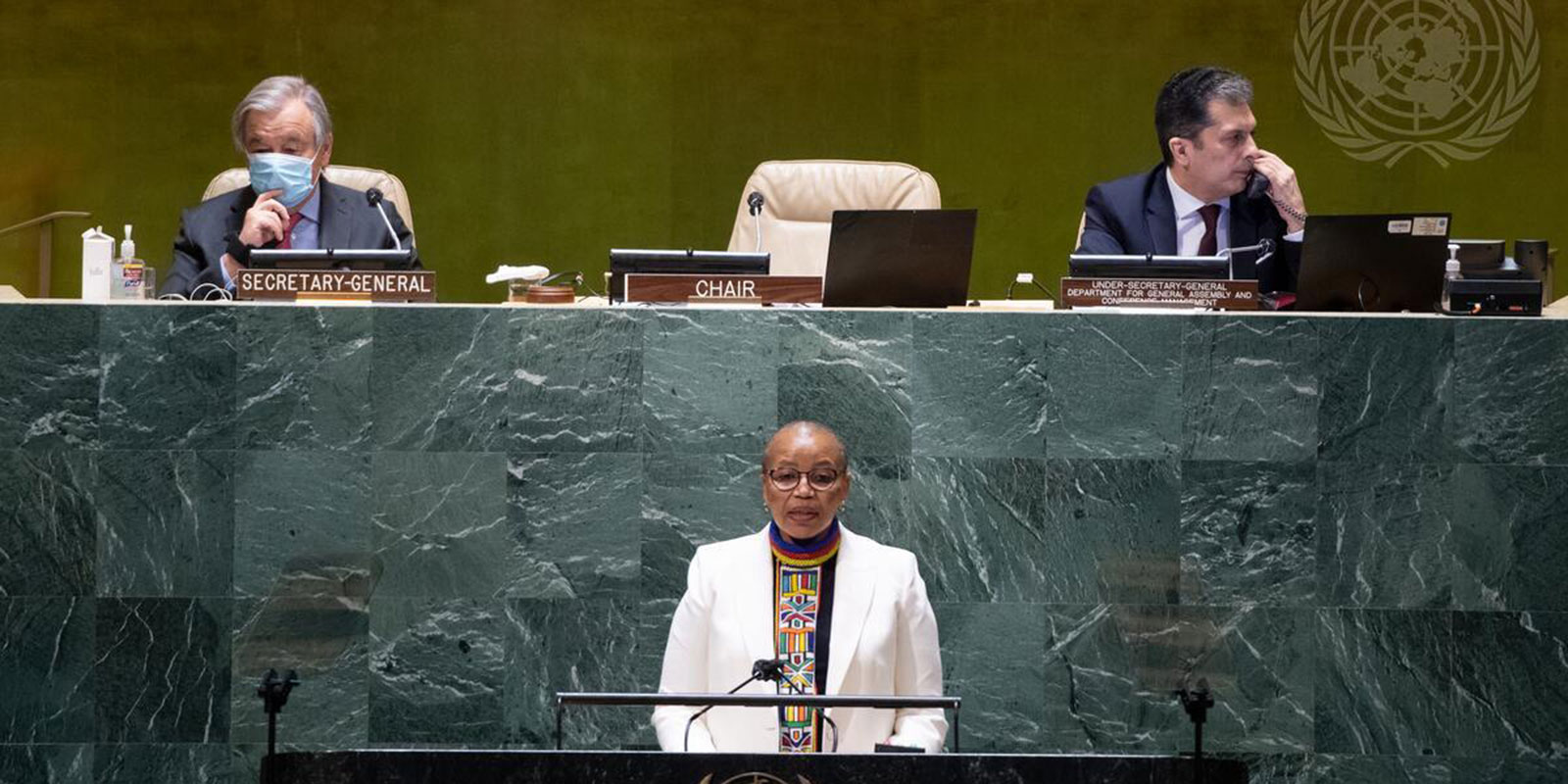
In this month’s Monitor we cover a range of thematic topics, as well as country or regional situations. We start with Ambassador Mathu Joyini, South Africa’s Permanent Representative to the United Nations (UN) in New York, who reflects on the recently concluded 66th Session of the Commission on the Status of Women (CSW).
Next Dr. Craig Moffat looks at the war in Ukraine and the challenges and opportunities it poses for African countries. From Ukraine, we turn to South Sudan; Dr. Moses John analyses the latest agreement to unify the security command structures. Staying with South Sudan, Dr. Andrew E. Yaw Tchie, Anne Funnemark and Katongo Seyuba look at how South Sudan is adapting to climate change and its implications for peace and security. Staying partly with climate change, we then shift focus to the Lake Chad Basin where Dr. Modesta Alozie and Dr. Chika Charles Aniekwe asks if and how the Governors’ Forum can help to address the challenges posed by climate change, weak governance, marginalisation, and conflict in the region.
Our last two contributions both deal with leadership. Mubanga Lumpa writes about the contribution of the late President Banda to democracy in Zambia. And Katharine Bebington reflects on the various options for dialogue and prospects for peace in Eswatini.