Years: 2023

  • The UN Security Council and the Future of MINUSMA

    The UN Security Council and the Future of MINUSMA

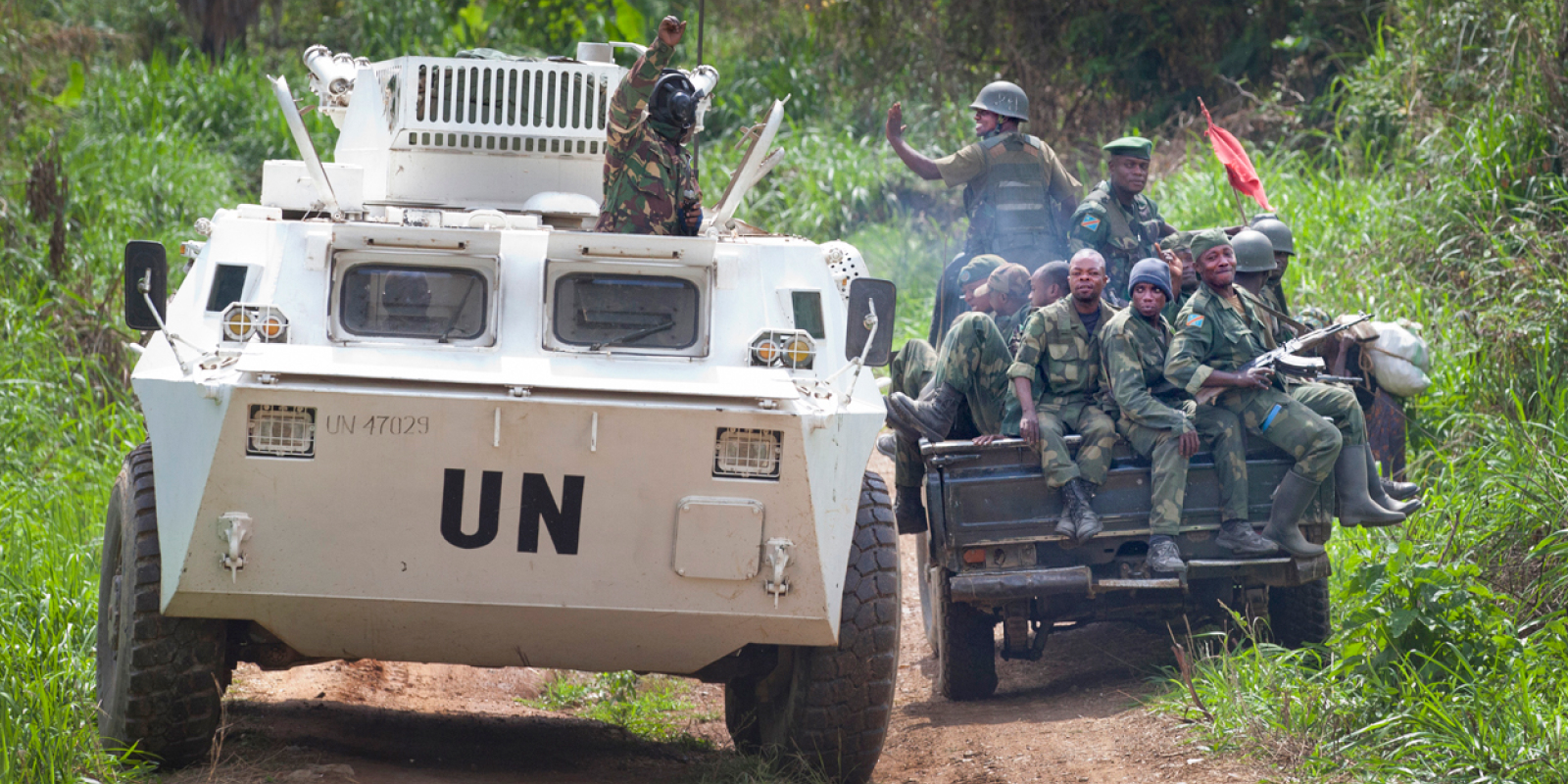
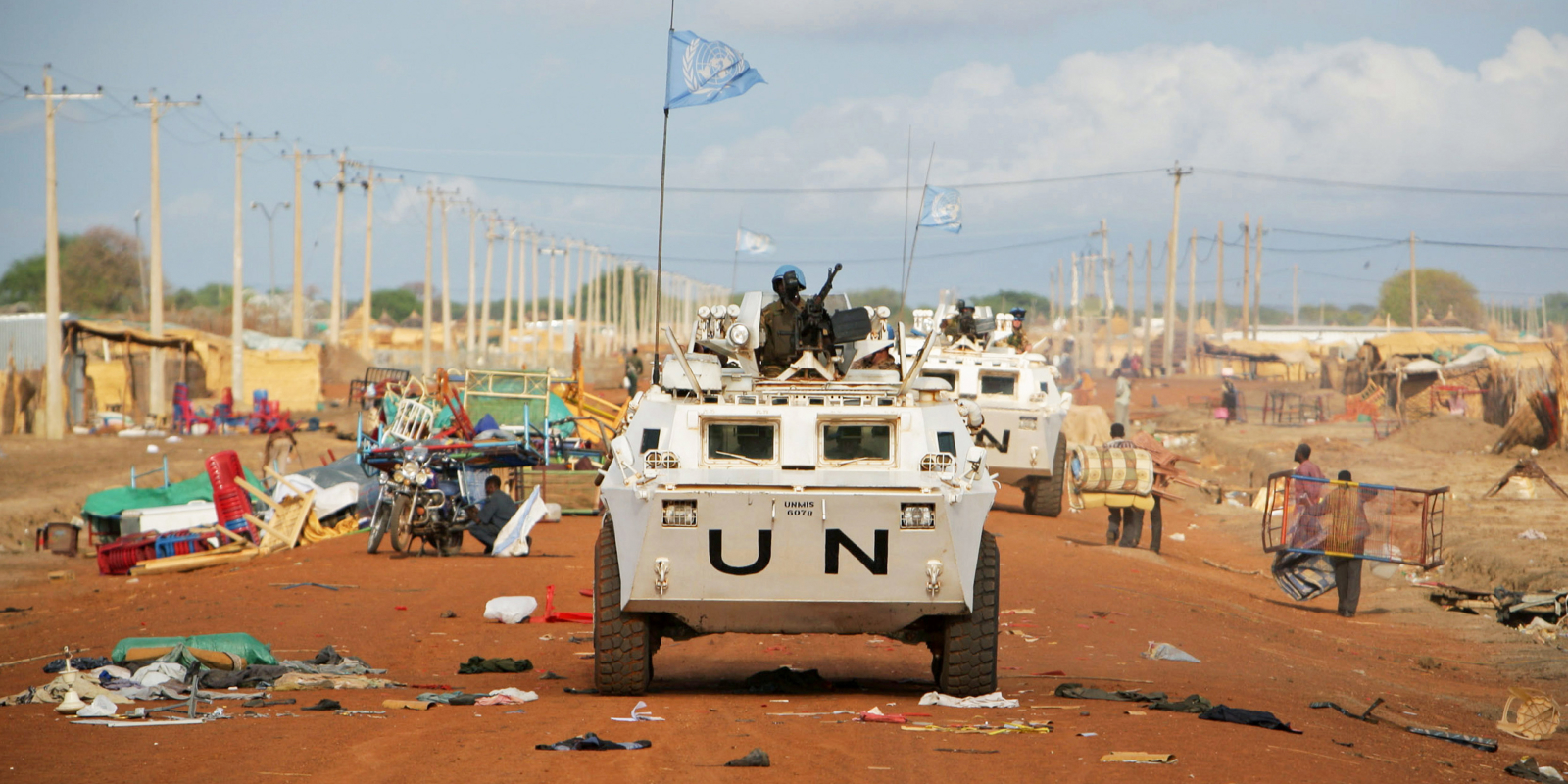
    On Friday 16th June, Mali’s Foreign Minister, Abdoulaye Diop, told the UN Security Council, that its 13,000-strong stabilisation mission (MINUSMA) should leave without delay. MINUSMA has tried to stabilise Mali for a decade, but Diop’s demand comes after a long period of increasingly difficult relations between the country’s junta and the UN. The junta has restricted access, curtailed mobility, and suspended rotations of UN peacekeepers making it even more difficult for the mission to fulfil its complex mandate, often in hostile terrain. It seems clear that MINUSMA must react, but how the UN Security Council decides to respond to the junta’s ultimatum will have broader and longer-term implications than the future of MINUSMA: the UN Security Council’s power and credibility are at stake and so are the future conditions for UN peacekeeping.

    Over the past decade, MINUSMA has attracted attention from policy makers and academics for several reasons. These include its deployment into a war-like environment with a much criticised robust mandate and heavy emphasis on force protection, neither of which stopped MINUSMA becoming the UN’s most dangerous current operation. MINUSMA also made headlines for a short-lived “European return to UN peacekeeping,” temporarily becoming the only UN operation in Africa with over 1,000 European troops. The mission has been criticised for being too offensive and thus breaching the UN’s basic peacekeeping principles, and for not using enough force, thereby failing to fulfil its mandate to protect civilians. There is however no doubt that MINUSMA has managed to reduce violence against civilians during the past decade, although to varying degrees over different periods. Moreover, it often goes unreported that it is the government of Mali which has the primary responsibility to protect civilians on its territory.

    There is however no doubt that MINUSMA has managed to reduce violence against civilians during the past decade, although to varying degrees over different periods.

    MIMUSMA also made headlines because it has had to work with not one, but two military juntas after coups in August 2020 and May 2021. The latest Malian junta in particular imposed many constraints on the mission. It has also entered into a vicious partnership with the Russian Wagner Group. These developments have reduced MINUSMA’s political and military leverage considerably. The current demand to leave comes only a few weeks after the UN released its much-awaited report on the Moura massacre of March 2022, which concluded that Malian armed forces killed over 500 people in collaboration with Wagner Group. The report was released more than a year after the massacre, in part due to the Malian government refusing access for UN observers, and in part due to political sensitivities and the consequences the report would have for the UN’s relations with the junta. The inclusion of the report in the new draft Security Council resolution on MINUSMA was heavily decried by the junta, making it possible that its latest demand was a reaction and negotiating tactic to ensure a revised resolution. Yet, UN troop contributing states have already reacted to Mali’s demand, notably Burkina Faso’s transitional authorities who have encouraged Mali’s ‘courageous decision’ and asked to withdraw their contingent from MINUSMA.

    Either way, the junta’s demand puts the UN Security Council in a difficult position, in part because MINUSMA’s mandate runs out on 30 June. Hence, another UN Security Council resolution is required to further extend the mission. One option would be for the Council to renew MINUSMA’s mandate and declare that the junta does not represent Mali’s de jure authorities. This would undoubtedly worsen political relations between the junta and MINUSMA, perhaps triggering violent confrontation.

    Alternatively, the Council could withdraw the mission, or not renew its mandate after 30 June. This would create a precedent whereby a junta—emboldened by Russia’s political and military support—can dictate the conditions for UN peacekeeping.

    A third scenario could involve Russia vetoing a mandate renewal resolution tabled by other members of the Council. A similar situation occurred in 2009, when the Russian Federation vetoed the draft resolution to extend the mandate of the UN Observer Mission in Georgia (UNOMIG). The UNOMIG mandate expired only six hours after the vote without any separate resolution to terminate and liquidate the mission. If something similar occurred in relation to Mali, it would at least allow other Security Council members to claim that MINUSMA’s departure was the result of Council internal divisions rather than the Council’s weakness in the face of the junta’s demand. It might also do less damage to the Council over the longer-term because it would not set any new legal precedents.

    None of these three options is good for the Security Council, or Mali’s civilians. But they would each generate different types of consequences. Maintaining MINUSMA without consent of the de facto host government would require the Security Council to declare that the current transitional government does not represent the country’s de jure authorities, given it assumed power through two military coups. This would be similar to events in December 2010 when the Council renewed the mandate of the UN Operation in Côte d’Ivoire (UNOCI), even after the incumbent president, Laurent Gbagbo, called for the mission to leave. In that case, the Security Council was divided between the “legalists,” the P3 and Germany who wanted to stick to the letter of previous Council resolutions, and the “sovereignists” (China, Russia, Brazil, South Africa), who were uncomfortable with what they saw as interference in Ivorian internal affairs. In Côte d’Ivoire, however, the presidential election results allowed the UN to disregard Gbagbo’s request and recognise his opponent, Alassane Outtara, as the victor, and hence the country’s legitimate president.

    In Mali, the Security Council has been careful to emphasise the return to constitutional order as a priority, as well as the transitional nature of the current government. This makes it theoretically possible for the Council to disregard the junta’s demand by claiming it is not the de jure authority representing the population. However, contrary to the situation in Côte d’Ivoire in 2010, Mali has no other legally elected authority for the Security Council to turn to in order to grant host state consent for a renewal of MINUSMA’s mandate. Keeping MINUSMA deployed against the will of the incumbent government would also make it even more difficult to try and revive the Algiers peace agreement, a task which was already exceedingly difficult. UN peacekeepers would also face a higher risk of being targeted by both a range of non-state armed actors and also government forces.

    Maintaining MINUSMA without consent of the de facto host government would require the Security Council to declare that the current transitional government does not represent the country’s de jure authorities, given it assumed power through two military coups

    If the Security Council decides to withdraw MINUSMA because of the junta’s demand, it will set a dangerous precedent for future peacekeeping, encouraging juntas to dictate if, when, and how UN operations should withdraw. This would be especially worrying in the current security climate in Mali, where the population has increasingly been subject to violence from both state armed forces partnering with Wagner Group, and from revived jihadist movements after Operation Barkhane completed its withdrawal in August 2022. There is also an increased risk of a resumption of hostilities between Northern armed groups and Malian forces, which would create a situation similar to 2012. MINUSMA’s exit will thus almost certainly result in more attacks against civilians and further embolden jihadist organisations.

    This wouldn’t be the first time a UN peace operation was expelled because a host government withdrew their consent. Other 21st century cases include Eritrea rejecting the continuation of UNMEE and Sudan rejecting an extension of UNMIS. And in 2006, the UN Operation in Burundi (ONUB), was asked to leave by the then newly elected government. A UN officer from the mission said that the request had come as a shock: the Burundian government “almost said that you’ve outlasted our welcome. It’s fine you can go now…it came as a shock.” Yet, to save face and to maintain a smaller peacebuilding and monitoring presence in the country, the UN managed to negotiate a phased withdrawal with the host government and establish the UN Integrated Office in Burundi (BINUB). In sum, in Burundi, the UN went from a 5,000 strong multidimensional mission to a civilian presence with less than 500 staff. This type of phased withdrawal with a small political office might also be possible in Mali, and was one of the three options proposed in the UN’s review of MINUSMA in January 2023. Yet, it would significantly reduce the UN’s ability to protect civilians and deter violence.

    The Malian government’s ultimatum illustrates some important current trends affecting UN peacekeeping. It highlights divisions in the Security Council, a more assertive attitude among several host governments and the sometimes-difficult relationships between UN peacekeepers, regional coalitions, and private actors. If MINUSMA is withdrawn or replaced, it will also add to the recent trend of closing larger UN multidimensional missions in favour of deploying smaller political missions. Whatever option the Security Council decides to take regarding MINUSMA, it is likely to have far-reaching consequences for UN peacekeeping operations more generally.

    Dr. Nina Wilén is Director of the Africa Programme at the Egmont Royal Institute for International Relations and Associate Professor at the Department of Political Science at Lund University, and Dr. Paul D. Williams is Professor in the Elliott School of International Affairs at the George Washington University.

    This article was first published by the EGMONT Institution on 19 June, 2023 and can be accessed here.
  • Will the South Sudan Model Apply to Darfur?

    Will the South Sudan Model Apply to Darfur?

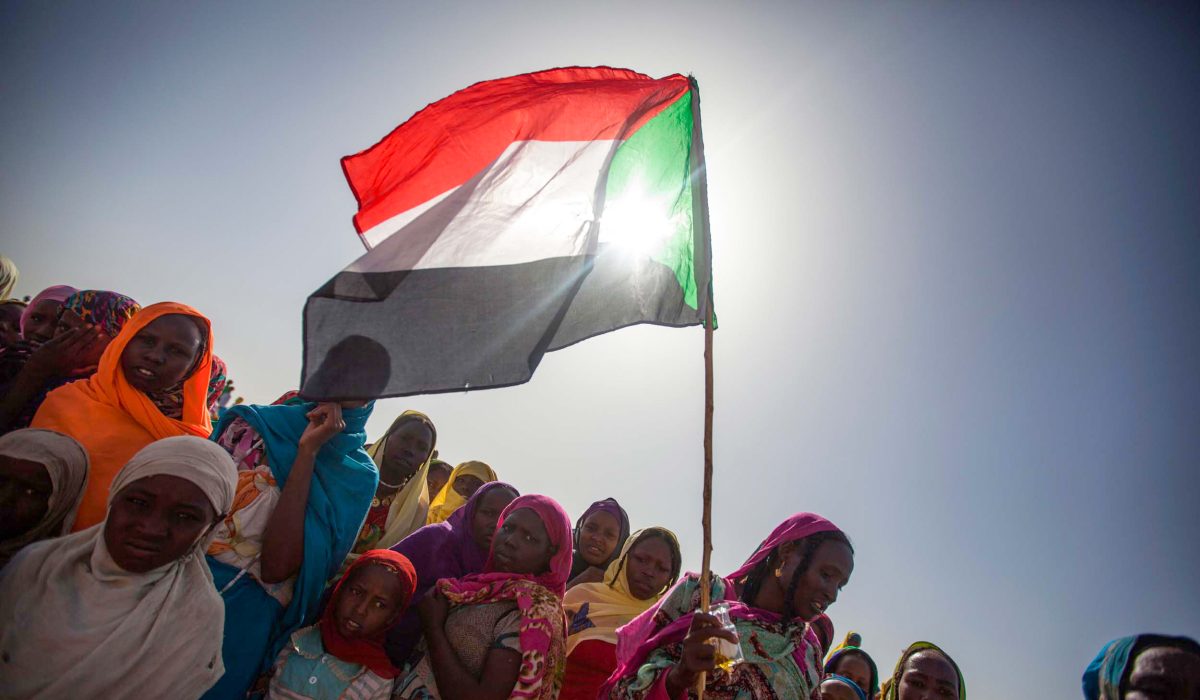
    For a long period of time, indications have shown that Sudan was heading for another serious conflict. An article by this author and published in Arabic on various platforms in Sudan and South Sudan on 19/11/2022 was circulated widely, predicting that a major battle was in the offing between the Sudan Armed Forces (SAF) and the Rapid Support Forces (RSF). In that article, the author suggested that the war would be promoted and sponsored by the Sudanese political leaders (civilians) with the support of some foreign powers. SAF and RSF would be victims of this proxy war. On 03/04/2023 the author published another article warning the Sudanese politicians and friends of Sudan that the country was heading for war and that they needed to come together and resolve their differences peacefully. On 17/04/2023\ immediately after the eruption of conflict in Sudan, the author further predicted that the war would have far-reaching consequences because of tribal inclination and that it needed to be arrested as soon as possible.

    It therefore comes as no surprise that following the outbreak of fighting in the Sudan in April, Gen Abdel Fattah al-Burhan, the leader of the SAF, issued a statement expressing concern about foreign interference and blamed Folker Perth, the Special Representative of the United Nations Secretary General (SRSG) in Khartoum for fuelling the current war because of his open support of Gen Mohamed Hamdan Dagalo, better known as Hemedti, of the RSF and Force of Freedom and Change (FFC) Central Council, as he claimed.

    Similar accusations have been made; take for instance the peace talks in Jeddah, in the Kingdom of Saudi Arabia, where the United States of America has pointed out the role of the Russian militia, Wagner Group (WG) in the Sudan war, although this has been categorically denied by the RSF.

    In the last three decades, prominent figures like the British-American historian Bernard Lewis have been advancing the idea of the restructuring of the Middle East and his article was published by the Middle East Magazine in 1992. Before Lewis, the idea was advanced by Former Prime Minister of Israel Shimon Peres in the conference convened in Madrid in 1991. It was believed that this plan was meant to create instability in the region. The Great Middle East (GME) as suggested by the above authors was accelerated by emerging Islamic extremist groups that operated in the region during the era of the “Arab Spring” in Tunisia, Egypt, Algeria, Libya, Yemen, Syria and Bahrain, although these were quelled before hitting their peak. According to Houaris Belhadj in his thesis “Arab Spring Revolutions: Causes and Consequences” published in the Arabic Journal of Legal Studies in December, the Arab region was faced with political, social and economic challenges but most importantly threatened by fragmentation (the translation may not be exact).

    Similar components of the GME Project were experienced in the Gulf war and occupation of Kuwait by late former President Saddam Hussein of Iraq who was then marked as one of the most powerful leaders in the region. The same was replicated in Libya against Muammar Gaddafi.

    In some countries, the GME project has registered some success, for example in the Arab’s western African countries like Morocco, Tunisia and Algeria and also in Yemen, Syria, Iraq, Libya and Egypt which survived narrowly because of its strong military ideology and formation under Gen Al Fatah Sisi, the current president of the Arab Republic of Egypt.

    The independence of South Sudan would never have been achieved so easily had it not been for the Great Middle East project which emerged in the 1990s

    This GME project has also contributed significantly to the secession of South Sudan from Sudan because the superpowers supported self-determination for the people of South Sudan which the people had demanded since the 1950s. The independence of South Sudan would never have been achieved so easily had it not been for the GME project which emerged in the 1990s. The West started to rally behind the Sudan People’s Liberation Movement’s (SPLM) quest for self-determination after the 9/11 terrorist attacks on the World Trade Centre in New York in 2001 and on the US Embassy in Nairobi in 1998 as examples. It was after these attacks that the self-determination for the people of Southern Sudan was agreed and signed by the Sudanese warring parties under the auspices of the United States Administration in 2002

    As stated above, the main objective of the GME project was to create instability in the Arab countries and fuel fanaticism, hence destabilising governments. Top of the list of targeted countries in the regions for instability was the Sudan. The plan was to split up the Sudan into four states. South Sudan was to include the Nuba Mountains and Blue Nile although the SPLM concentrated on the 01/01/1956 boundaries in their negotiations, abandoning other parameters which could be used to delineate these two regions as South Sudan, especially the Closed District Ordinance Act of the 1930s. These two regions have strong connections with South Sudan including deprivation and marginalisation.

    The second proposed state in the Sudan was Darfur. The region is bigger than France and it was the last region which joined condominium rule of British-Egyptian colonialism in 1916. This region has a lot of natural resources with tribal homogeneity except for factions that emerged as a result of Gen Hemedti’s continuous support for Arab tribes in the area.

    Hemedti has tried his best recently to change the game by apologising to Africans in the region for what happened during the Omar al-Bashir regime, arguing that he only acted on behalf of the regime. He has managed to conduct several communal reconciliations between the various tribes in the region.

    This move poses the threat of rallying the tribes around him if the war were to continue in Sudan. It is therefore advisable for warring parties and mediators in Jeddah to quickly resolve this deadly and divisive conflict in Sudan because its delay will force the RSF to move to Darfur and use the Central Africa Republic (CAR) as their base particularly with the presence of Wagner, their main ally in the area.

    Lately, racist statements are being used in the war. For example, a recent statement released by the spokesperson of the SAF that they have freed Sudan from the biggest opportunistic project in its history.

    This statement was misconstrued as alleging that when every person from the peripheries tries to take power in Khartoum he/she is considered to be opportunist. Yet for those in the centre and along the Nile it is business as usual. This slogan was used during a coup against President Jaafar Mohamed Numiri in the 1980s led by the late Philip Abbas Ghabouch and the late Niknora Magar Achiek and Sergeant Bol Jok, from Nuba Mountains and Southern Sudan respectively.

    The third state proposed out of the Sudan in the GME project is Eastern Sudan. The attempts to form this state are evidenced by plans that targeted ports in the Red Sea. The Beja tribal leader Mohamed Al-Min Tirik was reported to lead demonstrations against the government in Khartoum and Forces of Freedom Change-Central Council were posing threats of secession from Sudan if their concerns were not addressed. This trend is developing as war continues in Khartoum and Darfur.

    The fourth and the last proposed state in Sudan under the GME project is “Jellaba State”. This state was articulated by the “Hamadi triangle” that covers Northern Sudan, Jezzara, Khartoum and part of Kordofan. In the eyes of the marginalised people of Sudan, this state has dominated and exploited the country since independence, which substantiates the call for separations in Sudan.

    The West started to rally behind the SPLM’s quest for self-determination after the 9/11 terrorist attacks on the World Trade Centre in New York in 2001 and on the US Embassy in Nairobi in 1998

    It must be noted by wrestling forces in Sudan that the country is facing threats of fragmentation and the only solution to thwart this strategy is to return to the concept of the New Sudan articulated by the SPLM and its leader John Garang De Mabior, who advocated for a Sudan of equality, justice and democracy – a Sudan that accommodates everyone regardless of geographical location, race, tribe, religion, colour and gender. South Sudan strongly supports a united Sudan that preserves the rights of its citizens.

    Dr Dhieu Mathok Diing Wol was Associate Professor of Peace and Development Studies in the University of Juba, South Sudan and Secretary of Sudan Peace Mediation in South Sudan.

  • Conflict & Resilience Monitor – 29 June 2023

    Conflict & Resilience Monitor – 29 June 2023

    This month’s edition of the Conflict and Resilience Monitor features an article by Dr. Dhieu Mathok Diing Wol, the current Minister of Investment of the Republic of South Sudan, and Secretary of the South Sudan Mediation Committee for the Sudanese Peace Talks.  Dr. Dhieu reflects on the current situation in Sudan, the foreign influence in the conflict and the possible fragmentation of the Sudan state. We then move to Mali, with an article from Dr. Nina Wilén and Prof. Paul D. Williams about MINUSMA and recent developments following Mali’s Foreign Minister, Abdoulaye Diop’s, call for the UN mission to withdraw.

    Dr. Cedric de Coning has written an article on an adaptive peacebuilding book that he has co-edited, and that was published in March. He writes about the need to reform the current mechanisms used to try to work towards establishing lasting peace.  He argues that peacebuilding needs to engage from a participatory process that involves the people affected by the conflict, and that the solutions need to emerge from the context in which they are being implemented.  Karabo Mokgonyana and Emma Ng’ang’a have contributed an article about youth, peace and security (YPS).  YPS is still a relatively new agenda, and states are still trying to formulate initiatives, including YPS National Action Plans (NAPs).  The article argues that the NAPs are key to setting the YPS agenda in states in Africa, and that their creation needs to be done with the inclusion of youth.

    Finally, this refugee month, Keenan Govender has written an article about the ubiquitous nature of xenophobia in Africa and its detrimental impact on African unity.

  • Conflict & Resilience Monitor – 31 May 2023

    Conflict & Resilience Monitor – 31 May 2023

    We begin the May edition of the Conflict and Resilience Monitor with a feature article from H.E Kapinga Yvette Ngandu, the ECCAS Commissioner for Gender, Human and Social Development, who has written about the African Peace and Security Architecture, which celebrated its 20th anniversary in 2022.  Her article reflects on the structures of the APSA, lessons from the past 20 years and prospects for the future.

    Our second feature article is from Ambassador Frederic Gateretse-Ngoga, the senior advisor on international partnerships, the AU Border Programme, and regional security mechanisms in the office of the Commissioner for PAPS at the African Union Commission.  The Ambassador’s article deals with the issue of partnerships between the AU and UN as it relates to financing of African led peace support operations.

    Cedric de Coning reflects on the lack of trust between UN Peacekeeping missions in CAR, DRC and Mali and countries that host them and why these missions are not as effective as other UN peacekeeping missions.  With Anslem Adunimay’s article, we shift from UN peacekeeping missions to SADC’s role in the current conflict in eastern DRC and the role that the regional economic community has played in the past and the opportunities currently before it.

    Our penultimate article is about the AfCFTA and is written by Karabo Mokgonyana and Michlene Mongae.  Their article looks at the configuration of Africa’s borders and how the AfCFTA might improve trade prospects in Africa.  The final article is written by Aphile-Amanzima Mazibuko, who has written about the fourth industrial revolution, the growing digital gender divide in Africa and the importance of bridging this gap.

  • Anchoring ECCAS Peace Architecture on Human Security: Retrospective and Prospective Analysis of APSA @20

    Anchoring ECCAS Peace Architecture on Human Security: Retrospective and Prospective Analysis of APSA @20

    The ECCAS Commission is striving to give culture its letters of nobility, so that it can act as a tool for awakening consciences, a marker of our many and diverse originalities, a catalyst for unity in diversity and a vector of peace in a world exposed to aggression and other forms of violence.

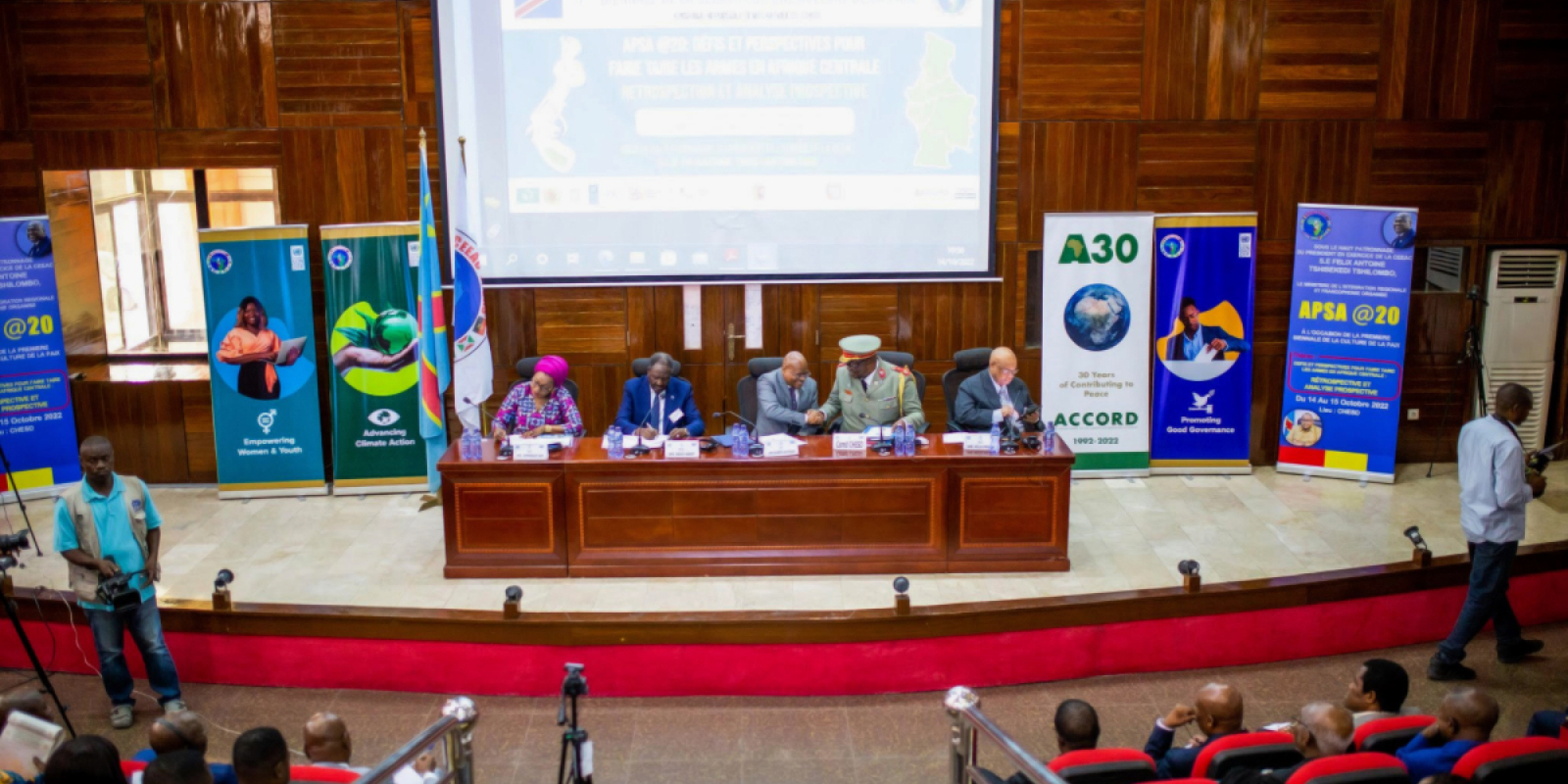
    With this in mind ECCAS held the 1st Biennial for the Culture of Peace in Central Africa in Kinshasa in October 2022. Organised and coordinated by the ECCAS Commission in partnership with the Government of the Democratic Republic of Congo (DRC), the United Nations Development Programme (UNDP), as well as key partners (ACCORD, ISS, CHESD, CICIBA), its aim was to:

    Although it faces many challenges, the APSA is the best framework for ensuring peace and security in Africa today

    1. Review the impact and contribution of the APSA in Central Africa over the years;
    2. Raise awareness of the importance of cultivating peace for individual and collective well-being;
    3. Examine the place of culture in the peace and security architecture of the region;
    4. Propose the constitutive pillars of an ECCAS multi-sectoral roadmap to silence guns in the region; and
    5. Identify the priority axis constituting ECCAS’ positioning on regional human security, which is imperative to modernise, strengthen and improve the security architecture, as well as to make it more proactive and pragmatic.

    The shocking history of the country hosting this conference, the DRC, which reflects that of all African countries, leads us to revisit our past and to ask ourselves about our common humanity. For this reason, I appreciate the fact that this conference was held in the Democratic Republic of Congo, a land full of symbols, that it gives us the opportunity to look back on the progress made over the last twenty years in the ongoing quest for peace, security and stability. If our emancipation was only possible at the price of the supreme sacrifice, today, after more than half a century, peace and security remain unconquered. Hence, there is an imperative need to use every device and ingenuity in the search for ways and means to meet this challenge. From this point of view, the review of the twenty years of existence of the African Peace and Security Architecture (APSA) of the African Union (AU) and its contribution to peace in Central Africa is timely.

    It should be recalled that the APSA, launched in Durban in 2002, is based on five pillars supporting the AU Commission, including the Peace and Security Council (PSC), as well as the Panel of the Wise, the Early Warning System, the Special Peace Fund and the African Standby Force (ASF). Its scope of intervention is therefore not limited to coercive armed action, but has very interesting prevention, negotiation and mediation mechanisms.

    With a view to the efficient deployment of the PSC, the APSA was conceived as a set of functional tools that could provide comprehensive responses to the problems arising from the most complex crises on the continent.

    In January 2015, the AU Heads of State and Government adopted Agenda 2063, one of whose major aspirations was to silence the guns by 2020, and also agreed to establish the Luanda Biennale for the Promotion of the Culture of Peace to support this objective. Indeed, Aspirations 3, 4 and 5 of Agenda 2063 envisage an Africa of good governance, democracy, respect for human rights, justice and the rule of law; as well as an Africa living in peace and security, and an Africa with a strong cultural identity, a common heritage, shared values and ethics, respect for religious diversity and the conscience of the African people and its diaspora.

    Thus, the culture of peace and tolerance will be instilled in the youth through peace education and the reinforcement of shared values. Conflict prevention and resolution based on dialogue will be actively promoted so that the guns are silenced.

    In response to the continent’s failure to silence the guns by 2020, the Assembly of Heads of State extended the AU’s main roadmap on silencing the guns for ten years. The APSA’s objective is therefore to silence the guns by 2030, with a strengthened funding mechanism through the adoption of a governance and management structure for the Peace Fund approved by the AU Assembly in February 2020. A truly operationalised Peace Fund will provide Africa with the strategic autonomy it lacks today. It will enable the AU and regional communities to take full responsibility for their peace and security programmes based on their own assessment of the problems and an autonomous appreciation of appropriate solutions to build the Africa we want based on African solutions to African problems.

    Furthermore, the new Protocol on Relations between the AU and RECs adopted in February 2020 emphasises, among other things, the strengthening of links between the two continental and regional structures, conflict prevention through preventive diplomacy and conflict management based primarily on dialogue.

    Although it faces many challenges, the APSA is the best framework for ensuring peace and security in Africa today. In this respect, there are several positive points to its credit:

    Firstly, the Constitutive Act and the Protocol establishing the PSC enshrined the ‘intervention power of the AU’, including through the deployment of peacekeeping or peace-enforcement operations. Thus, despite its limited resources, the PSC has become the key body for promoting peace and security on the continent. Under its impetus, the AU has implemented its ‘principle of non-indifference’ or ‘active solidarity’, as demonstrated by its intervention in Darfur and Somalia.

    Secondly, despite the slow response of the Panel of the Wise at the continental level, preventive diplomacy has been deployed by the AU and RECs or by the PSC when crises have erupted. Even if the results of these deployments remain limited due to the complexity of certain crises, they have had the merit of marking the presence of APSA structures. We can cite the cases of the DRC with the facilitation of Edem Kodjo and the case of the Central African Republic (CAR), to mention only those in the Central African region. Elsewhere in Africa, the Panel of the Wise stood out in Mali before and during the last two coups d’état, as well as in Guinea, Burkina Faso and the Gambia.

    Thirdly, in the context of conflict response, the PSC authorised the deployment of a peacekeeping mission in our sub-region, in CAR, which has taken over from ECCAS’ MICOPAX. Elsewhere in Africa, the PSC deployed efforts within the framework with regard to the G5 Sahel and continued to renew the mandate of existing missions such as the AU Mission in Somalia (AMISOM), the Joint Multinational Task Force and the hybrid operations of the AU-UN Mission in Darfur.

    Fourthly, the PSC has also been involved in addressing various cross-cutting peace and security issues. These include terrorism and violent extremism in the Horn of Africa, the Lake Chad Basin and the Sahel Region, cross-border and maritime disputes, climate change and foreign military presence, as well as the protection of civilians, refugees, the fight against sexual violence, the Ebola virus outbreaks and the COVID-19 pandemic.

    ECCAS has actively collaborated with the African Union in the course of the various crises in the region, particularly in Chad, CAR and the DRC through the deployment of its various peace and security mechanisms. In the context of conflict management situations, it is worth noting the full collaboration efforts between ECCAS and the AU to ease tensions and instil dialogue among the stakeholders in the Central African crisis. I regularly travelled to the field between 2020 and 2022 in the company of my AU, UN and EU counterparts to bring the stakeholders back to dialogue and facilitate the holding of peaceful presidential and legislative elections, and the protection of civilians, refugees and IDPs.

    However, it must be acknowledged that after twenty years of existence, the APSA has demonstrated certain limitations. These include:

    • Its inadequacy to present realities and the need for its evaluation and rehabilitation;
    • Political difficulties, in particular the lack of flexibility on the part of States to authorise good offices missions quickly before internal crisis situations escalate;
    • Lack of coordination, coherence and synergy between the AU and RECs;
    • The limited availability of financial, human and technical resources;
    • The slow response of prevention structures, such as the Early Warning System and the Panel of the Wise;
    • Failure to address structural issues and vulnerabilities in conflict prevention efforts;
    • The absence of a comprehensive human security policy; and
    • The inadequacy of the ASF with the military requirements of conflict management, such as the frequent circumvention of the ASF by bilateral defence arrangements between certain countries to deal with armed conflicts; among others.

    In this configuration, what are the prospects for the future?

    They can consist of a few key actions which, from our point of view, are as follows:

    • Explore opportunities to better coordinate continental, regional and local efforts to achieve Aspirations 3, 4 and 5 of Agenda 2063, namely a democratic, well-governed, peaceful and secure Africa, with a focus on anticipating governance-related events and conflict prevention discourses; with a reinforcement of shared values and ethics, respect for religious diversity, history and the rooted identity of the African people.
    • Strengthen the alignment of Agenda 2063 priorities, including its flagship initiatives, with the Strategic Plans of the newly structured Commission, taking into account the division of labour defined in the reform process, with regard to the priority orientation of the AU vis-à-vis the RECs;
    • The establishment of modern conflict resolution systems based on robust bottom-up approaches, systems and tools;
    • Make an urgent call for an update of the APSA which should take into account the place and link between the APSA and the culture of peace to make it fully functional and operational;

    In the context of the Central Africa region:

    • Launch an appeal to the countries of the region to take appropriate measures for the full operationalisation of FOMAC;
    • Strengthening regional human security policy;
    • Accelerate the full operationalisation of the Committee of Elders and the Network of Women Mediators of Central Africa, as well as the Youth Coalition for Peace, and fully incorporate them as bodies for conflict prevention and resolution, mediation or reconciliation in the region. For if only tacitly, the Comité des Sages and the Network of Women Mediators of Central Africa open up a space that favours the dissemination of national cultures in the modus operandi and become de facto privileged relays by governments.

    In any case, the AU and ECCAS are at a crossroads which must be analysed through the prism of the reforms underway at their respective levels. This is why, to conclude, I would like to share with you this perception which is dear to us at ECCAS and which puts the human being at the centre of our concerns, so that he or she can reap the benefits of peace, security and stability; it is human security!

    ECCAS has actively collaborated with the African Union in the course of the various crises in the region, particularly in Chad, CAR and the DRC through the deployment of its various peace and security mechanisms

    It is that security which we see as a means of keeping people safe from both violent and non-violent threats; in any case, as an essential condition for a state of well-being characterised by freedom, safety and the right to life. It is by contributing to the full realisation of this objective that we can consider ourselves useful to our sub-region and our continent.

    Kapinga Yvette Ngandu is the ECCAS Commissioner for Gender, Human and Social Development.

  • Towards a Renewed AU-UN Partnership: Financing of African Union Led Peace Support Operations

    Towards a Renewed AU-UN Partnership: Financing of African Union Led Peace Support Operations

    The issue is not that the world lacks financial resources. It is rather a case of inertia, lack of will and zero-sum calculus. Time is of the essence for the needed paradigm shift, and that time is now. Sometimes it takes less time to do the right thing than the years we have spent explaining why it could not be done.” – Dr Donald Kaberuka, AU High Representative (AUHR) on Financing the Union and the Peace Fund

    The financing of the African Union (AU) peace support operations is a perennial issue, and it is one that has occupied immense scholarly discussion over the years. Currently it is receiving significant policy attention in both United Nations (UN) and AU Headquarters with the submission of Secretary-General Guterres’ report on the financing of AU operations, and the UN Security Council debate on peace and security in Africa under the Swiss Presidency on 25 May 2023.

    Given these recent discussions, what has become clear is that it is time now – more than ever – for the UN Security Council to endorse one of the funding models outlined by Secretary-General Guterres for the predictable, sustainable, and flexible financing of AU-led operations and modalities for AU missions to access UN accessed contributions. Against the backdrop of a fractured multilateral security architecture, increasingly complex and intractable conflicts on the continent, and at the risk of increased divergence between the UN Security Council and the AU Peace and Security Council (PSC), this milieu presents an important opportunity to strengthen the multilateral security architecture and to shore up the capacity of the AU to respond to conflicts on the continent.

    Making the Case for UN Financing of AU-led Peace Operations

    Over the past twenty years, the AU has become a significant actor in managing and resolving conflicts on the continent. The AU’s track record over this period has confirmed that the maintenance of international peace and security is no longer just the purview of the United Nations, but that regional organisations and arrangements have a role to play as well, as envisaged by Chapter 8 of the UN Charter. The African Peace and Security Architecture (APSA) provides a comprehensive set of institutional mechanisms to resolve conflicts on the continent. The AU Peace and Security Council (PSC) or the Assembly can choose to deploy African Peace Support Operations (PSOs) which are multinational, multifunctional, and multidimensional operations wherein the AU exercises direct Command, Control and Management to restore or maintain peace within a specific area of operations.

    AU peace operations cover a broad range of mission types, including peace enforcement, counter-terrorism or stabilisation interventions as is the case in Somalia, but also peacekeeping, as was the case in Burundi. Despite the success of AU PSOs – as scholars have noted – AU PSOs struggle due to a number of limitations: namely, the lack of available resources and capacities that limit their efficacy and impact.

    the AU has made significant headway in strengthening its institutional capacity to finance AU operations, as demonstrated by the effective operationalisation of the African Union Peace Fund and the formalisation of rigorous institutional compliance and accountability mechanisms @NgogaFred

    The lack of resources limits what AU peace support operations can achieve. This is evident with the African Transition Mission in Somalia (ATMIS), the successor transition mission to the  African Union Mission in Somalia (AMISOM), which is currently facing a budget shortfall of nearly $100 million, largely owing to a reduction in partner support for key initiatives, such as the European Union’s African Peace Facility (AFP). The funding crisis poses significant challenges for the effectiveness of AU missions. The crisis comes at a time when the security threats pose grave risks to not only regional security threats, but also threats to international security. The AU and the Regional Economic Communities (RECs) are facing increasingly complex conflict dynamics and hybrid security threats that require robust and multidimensional configurations. Further complicating the equation is the range of tasks that missions are mandated with, and that is increasingly being asked of them by international and regional institutions, but also by local communities and host states.

    There are two reasons why UN financing of AU-led peace operations is not only necessary but is a wise choice. First, AU-led missions having access to UN resources is not new. This is certainly the case with ATMIS, and its predecessor AMISOM, which receives comprehensive logistical support and backstopping through the United Nations Support Office in Somalia (UNSOS) and its predecessor the United Nations Support Office to AMISOM (UNSOA). Logistical support and backstopping of ATMIS is fundamentally in degrading Al-Shabaab’s capabilities in Somalia and has been a vital lifeline in the past, saving valuable lives and assets.

    Second, the AU has made significant headway in strengthening its institutional capacity to finance AU operations, as demonstrated by the effective operationalisation of the African Union Peace Fund and the formalisation of rigorous institutional compliance and accountability mechanisms. What the AU Peace Fund has been able to achieve in such a short order is remarkable. By the end of 2023, it is projected that the Fund will have nearly $400 million, with the majority of it provided by contributions from its member states. In addition, rigorous financial governance and accountability mechanisms have been institutionalised, including the establishment of a Board of Trustees for the Peace Fund and the retaining of professional fund management services in line with established investment guidelines. These developments demonstrate that the institution is ready to deliver on the AU Assembly’s decision to finance 25% of the AU’s peace and security activities.

    AU and REC-led missions are best equipped to engage in the necessary enforcement and stabilisation tasks that UN peacekeeping is not designed to undertake @NgogaFred

    Conclusion: Back to the Basics: the Primacy of Politics

    The UN Security Council must go back to basics when it comes to the question of the financing of AU operations: the primacy of politics. Clear political strategies are needed for the effective resolution of conflicts. However, a necessary condition for effective national reconciliation, dialogue, and peace processes to take place is the stabilisation of complex security environments. AU and REC-led missions are best equipped to engage in the necessary enforcement and stabilisation tasks that UN peacekeeping is not designed to undertake. As such, well-equipped and resourced AU mandated and authorised missions is an imperative to the successful sequencing of stabilisation and peacebuilding efforts.

    Ambassador Frederic Gateretse-Ngoga is a Burundian diplomat who is currently the senior advisor on international partnerships, the AU Border Program, and regional security mechanisms in the office of the Commissioner for Political Affairs and Peace and Security of the African Union Commission.

  • How Not to Do UN Peacekeeping

    How Not to Do UN Peacekeeping

    What factors influence the effectiveness of peace operations? Looking back over the past 75 years of United Nations (UN) peacekeeping, this is the most enduring question from researchers and policymakers. Historically, most peacekeeping operations have been successful. However, UN peacekeeping is now under new pressure because of a significant loss of trust between its three large stabilisation operations and their host countries of Central African Republic (CAR), the Democratic Republic of the Congo (DRC), and Mali.

    This trust deficit, coupled with financial pressure and heightened geopolitical rivalry, has resulted in a steady decline in the number of UN peacekeeping operations over the last decade. No new peacekeeping missions have been deployed since 2014. The new peace operations that have been deployed over the last decade—for example, the UN Verification Mission in Colombia, the UN Mission to Support the Hodeidah Agreement (UNMHA), and the UN Integrated Transition Assistance Mission in Sudan (UNITAMS)—have all been deployed as special political missions.

    When armed groups are disrupted but not defeated, they may morph into something better and stronger.

    This may be a temporary period of contraction and moderation, but it does signal a tension between the overall evidence that UN peacekeeping works and the current perception in the Security Council and elsewhere that the remaining large UN peacekeeping operations are ineffective and problematic.

    Despite the role of the UN peacekeeping operations in CAR, the DRC, and Mali in contributing to preventing large-scale violent conflict and protecting thousands of civilians, the security situations in each of these countries have deteriorated over the last few years. The mandates, capabilities, and activities of these missions were thus insufficient to end violent conflict and to prevent an increase in civilian and combatant casualties and deaths. The inability of these operations to protect civilians at a scale matching the expectations raised by their mandates has contributed significantly to the perception that these operations are ineffective.

    One significant factor that distinguishes the UN peacekeeping operations in CAR, the DRC, and Mali from the historic record is the absence of a viable political or peace process. One of the most enduring lessons we have learned over the past 75 years of peacekeeping is that, without such a process in place, peace operations cannot be realistically expected to end the conflict in these countries on their own. Peace cannot be imposed.

    Another factor that sets these missions apart from the historic legacy of UN peacekeeping is that they have all been specifically designated as “stabilisation” missions. Previously, only one other UN peacekeeping mission had “stabilisation” in its name—the UN Stabilisation Mission in Haiti. There is currently no UN policy that explains why these three missions are called stabilisation missions, what the implications are for their mandate, or how they differ from peacekeeping operations that do not have stabilisation in their name, like the UN Mission in South Sudan. However, if we analyse the mandates and actions of the three stabilisation missions in CAR, DRC, and Mali, we can identify that what they have in common:

    • they operate in the midst of ongoing conflicts, without a clear peace process or political project;
    • they are mandated to contribute to restoring and maintaining stability by helping to protect the government and its people against identified aggressors; helping the government to reclaim control over territories previously controlled by such aggressors; and helping the government to extend the authority of the state throughout its territory;
    • they operate in support of and alongside the security forces of the host-nation, and their mandates often include supporting efforts to build the capacity of these security forces; and
    • they are mandated to use force robustly in the face of anticipated attacks against themselves and those they are tasked to protect, and encouraged to do so proactively.

    The essential difference between peacekeeping and stabilisation seems to be that, in peacekeeping, the aim is to maintain a cease-fire or implement a peace agreement with the consent of the parties to a conflict, while in stabilisation, the theory of change seems to be to assist the host state to restore and maintain order by containing aggressors, protecting civilians, and building the capacity of the state, especially its security services. There are thus important differences between how the principles of peacekeeping—consent, impartiality, and use of force in self-defence—are interpreted in peacekeeping and stabilisation operations. In stabilisation operations, the missions only have the consent of the host state and are mandated to act against certain parties to the conflict, so their impartiality can be questioned, at least in relation to those identified to be aggressors. For example, they are authorised to use force to protect civilians, UN and other international staff and humanitarian workers, and in the case of the DRC, to neutralise armed groups like the M23.

    All the high-level strategic reviews of UN peacekeeping, including the Brahimi panel (2000) and the High-level Independent Panel of Experts on Peace Operations (HIPPO) report (2015), stressed the primacy of politics and the importance of peacekeeping being directed by a clear political strategy. Adam Day and Charles Hunt point out that a preoccupation with protection distracts from the primacy of politics and other interdependent priorities.

    I will go a step further and argue that protection and stabilisation mandates, in a context where there is no cease-fire, peace agreement or viable political project, produce a stabilisation dilemma: The more effectively a peace operation protects civilians and helps to achieve stability, the less incentive there is for ruling political elites to find long-term political solutions. This often produce an outcome that Jan Pospisil refers to as a “formalised political unsettlement.”

    • unintended consequences. Stabilisation is inherently a state- and institution-building set of activities. From a Western state formation experience, the assumption is that state institutions are politically impartial, but the reality in many of these settings is that one set of elites has captured the state, and others contest their exclusion and marginalisation. If the UN is perceived to be enhancing the capacity of one party to the conflict against others, then it becomes a part of the conflict and loses its impartiality. Sarah von Billerback and Oisín Tansey argue that another unintended consequence of these mandates is that they unintentionally enable authoritarianism by building the capacity of incumbent authoritarian leaders and by signalling a permissive environment for authoritarian behaviour. A further perverse effect is that it traps peacekeeping operations in place, because without a viable political project, they lack an exit strategy or end-state.
    • local political economy. The political and economic elites that have captured the state are extracting a rent from the peacekeeping operation and the international presence they enable, through the renting of properties, the provision of private security and other services, and income for the local retail and entertainment sectors. They thus have an incentive not to create the conditions that will interrupt their ability to sustain this rent economy.

    Both the Brahimi report (deploy only when there is a peace to keep) and the HIPPO report (the primacy of politics) emphasised that UN peacekeeping operations can be effective only when there is a viable political project they can support and protect. This implies that the Security Council should only deploy a UN peacekeeping operation if there is a cease-fire agreement; a peace agreement or a peace process to which the major parties to the conflict have committed themselves; or a clear political roadmap towards such a peace process that is realistically achievable.

    Both the Brahimi report and the HIPPO report emphasised that UN peacekeeping operations can be effective only when there is a viable political project they can support and protect.

    The point is not that the UN Security Council should shirk its responsibility, but rather that it should not turn to UN peacekeeping operations for the sake of convenience or political expediency. The Security Council has a range of tools at its disposal and a spectrum of peace operations to consider. UN peacekeeping operations is one of these tools. Seventy-five years of peacekeeping experience has shown that it is effective in certain contexts but performs poorly in others, and one of the key factors that influences its effectiveness is whether there is a viable political project in place. If there is not one, then the consistent advice to the Council from the various expert commissions it has commissioned over the years is that it should look beyond peacekeeping to the other tools at its disposal. This can, depending on the situation, imply diplomatic and peacemaking efforts to pursue cease-fire and peace agreements, and when there is a need for peace enforcement, look to coalitions of the willing or regional arrangements, like mandating the African Union to act on its behalf.

    This paper was first published by the International Peace Institute’s Global Observatory on 17 May 2023, and the original article is available here: https://theglobalobservatory.org/2023/05/how-not-to-do-un-peacekeeping/

    Cedric de Coning is a research professor with the Norwegian Institute of International Affairs (NUPI) and a senior advisor to the African Centre for the Construction Resolution of Disputes (ACCORD). He also coordinates the Effectiveness of Peace Operations Network (EPON).

  • SADC deployment into Eastern DRC: Implications and Opportunities

    SADC deployment into Eastern DRC: Implications and Opportunities

    Events in the Democratic Republic of Congo (DRC) and most especially in the eastern regions have yet again drawn media attention with the floods that have hit the south-eastern Kalehe territory of the DRC, killing about 400 people and leaving villages submerged. These events have once more dampened international and regional efforts to curb the country’s humanitarian crisis related to the ongoing war in the eastern regions of the DRC. It is important to underscore that peace and stability continue to be elusive in the eastern DRC and the region as the conflict goes back decades to the mid-90s following the genocide in neighbouring Rwanda. The genocide involved several armed groups, some of which were formed by Rwandan Hutus who crossed the border into the eastern region of the DRC. These armed groups then threatened not only the population along the eastern region but also the population of neighbouring states, eventually leading to a full-blown conflict.

    Africa’s dependence on resource mobilisation from the west and other foreign partners to lead peace and security agendas puts not only SADC but the other regional players at the mercy of these funders.

    What is the state of affairs at the moment?

    One would argue that the conflict has since become self-sustaining considering that a group of people, which is highly skilled and well versed in violence, has been established amongst the locals, foreign armed groups, and the states in the region. The deteriorating security situation in eastern DRC, with the military activities of various proxy-armed groups, has caused a major humanitarian crisis, recording millions of deaths and displacement of people and stoking tensions between the countries in the region. Since the outbreak of the conflict, various efforts have been made both regionally and internationally, through various peace agreements and deployment of troops, to stem the violence and to stop the military activities of the various armed groups operating in the region.

    Active Armed Groups

    There are approximately 120 militias or armed groups that actively operate in the eastern provinces, many of whom are systematically involved in committing widespread violations and abuses that amount to atrocity crimes. Recently, despite military offensives conducted by the government’s armed forces (FARDC), with assistance from regional forces and the UN peacekeeping mission (MONUSCO), violence has spiralled amidst a resurgence in activities by groups such as the Cooperative for the Development of Congo (CODECO), the March 23 Movement (M23) and Allied Democratic Forces (ADF). This recent resurgence of militia activities has subjected Congolese civilians to widespread rape and sexual violence, massive human rights violations, and extreme poverty.

    Immediate Collective Action: What has been done to end the Crisis?

    As of last year, regional leaders and emissaries from various subregional bodies such as the African Union (AU), East African Community (EAC), the International Conference on the Great Lakes Region (ICGLR), and the Southern Africa Development Community (SADC) have been very active with calls for restraint on the part of warring parties. In November 2022 a ceasefire agreement to take effect from 7 March this year was brokered and the M23 were meant to withdraw from occupied territories. Despite this agreement, and ongoing diplomatic efforts by the various regional emissaries, M23 has made additional territorial gains and continues to clash with the FARDC. As a result of the continued fighting, early this year, the EAC and the ICGLR held a mini summit on 17 February to discuss the security situation in eastern DRC and to recommit themselves to finding ways to end the conflict.

    It is in line with this recommitment that the EAC decided to set up its own monitoring and verification mechanism to supplement the existing mechanisms deployed by the ICGLR in eastern DRC. In addition, during the EAC summit, the EAC directed all troop-contributing countries of the EAC Regional Force (EACRF) to deploy their forces to counter, recapture, and secure areas where the M23 is supposed to have withdrawn.

    The Role of SADC

    SADC’s role and involvement as one of the key subregional players in the DRC dates back as early as 1998 through a combination of military intervention and mediation. Since then, SADC has been at the forefront of advancing dialogues and negotiations to end the various episodes of conflicts in the DRC. For instance, SADC was one of the institutions (together with the UN, AU and the ICGLR) that made the call to deploy the Force Interventions Brigade (FIB) in eastern DRC in 2013. The FIB is a regional peacekeeping force, consisting of 6 000 troops from SADC member states (Malawi, Tanzania and South Africa), with the need to stabilise the eastern DRC and prevent mass atrocities. Earlier this year, SADC decided to send troops to help end the conflict in the eastern region of the DRC. This came after a series of meetings with the different sub-regional players that have deployed forces in the DRC to promote effective coordination of interventions in the DRC and a field assessment mission to eastern DRC from 27 February to 8 March. The Congo’s Foreign Minister Christophe Lutundula noted that this decision is timely considering that it will go a long way in “the restoration of a definitive peace by enforcing the sacrosanct principle of the inviolability of the borders of each country”. 

    Assessment and Way Forward

    Whilst there is a continuous call for Africa to become more involved in its peace and security processes and to promote African solutions to African problems, one challenge that continues to impede on SADC’s effort in restoring peace and stability in the eastern region of the DRC, is that of institutional capacity. This is not a problem unique to SADC alone, as it is also experienced by other continental and regional organisations. The business of engaging in conflict prevention, peace-making and peacebuilding support processes is quite costly. Thus, Africa’s dependence on resource mobilisation from the west and other foreign partners to lead peace and security agendas puts not only SADC but the other regional players at the mercy of these funders.

    It is important that the coordination of forces should be at the forefront of every decision to ensure that human casualties are minimised

    This then begs the question: is SADC and the continent able to own its peace and security processes considering that it is financially incapacitated? The answer is definitely no and as such, the peace and security challenges and processes will likely remain hollow, particularly if those seeking to drive such processes do not have adequate resources to fully operationalise this. Nonetheless, it is important that the coordination of forces should be at the forefront of every decision to ensure that human casualties are minimised. For this to take effect, the following measures should be put in place.

    • Firstly, the DRC government, MONUSCO and the joint EAC/SADC forces deployed to the eastern provinces must have in mind that the protection of civilians remains their primary priority as they seek to tackle the ongoing threat posed by various armed groups.
    • Secondly, neighbouring states that were involved in the signing of the “Peace, Security and Cooperation Framework for the DRC and the region” should continue to uphold the Framework and ensure that forces deployed to eastern DRC refrain from illicit activities.
    • Thirdly, it is paramount that the international community should desist from all military assistance to states identified as supporting M23 and other armed groups.
    • Finally, the government of the DRC alongside MONUSCO and the joint EAC/SADC forces should put in place mechanisms that will build trust with communities through various consultative fora with civilian populations and civil society about needs for protection.

    Anslem Adunimay is a member of the Research Unit at ACCORD

  • Impact of Border Insecurity on AfCFTA Trade Facilitation

    Impact of Border Insecurity on AfCFTA Trade Facilitation

    Borders are one of the universal traits that countries share in common. Although the formation of borders in Africa is contentious, the protection of states territorial sovereignty at an international, regional and domestic level has become the subject of much discussion over the years. Boundaries have had a considerable political, social and strategic impact on African states. The discussion of borders is an interdisciplinary one that examines the far reaching impacts that it has, as it shapes and informs the cultural, economic, environmental and social character of a people, and as such the nation state. Borders and borderlands in Africa have become spaces where the nexus of security, development, crime, conflict and politics often interface and collide.

    The identity of a state was tightly centred on the national identity with geographic boundaries. This ascription of territory to statehood can be traced generally to the Peace of Westphalia in 1648. The colonial political geography originates from the Berlin Conference of 1884-85. The outcomes thereof not only imposed on Africa its present borders, but also attempted to assimilate Africa into the European concept of nation-states with clearly defined and demarcated borders. There are approximately 110 inter-state boundaries in Africa and various other inter-state borders that criss-cross the length and breadth of the African continent. In addition to this, there are about 14 landlocked African states, which is more than the rest of the world put together. This is primarily a result of the colonial rationale of African political geography, which in turn has presented modern Africa with problems.

    With the establishment of the African Continental Free Trade Area (AfCFTA), trade facilitation on the continent is projected to increase

    How a state defines or determines the purposes and functions of its boundaries is essential to its success in controlling its territory, and this, in turn, has a profound impact on its neighbouring states in a number of ways. The residue of the delimitation of African boundaries has significantly impacted the tremendous diversity presented by ethnic composition, socio-economic structure, and physical characteristics of the sub-region having far-reaching spatial consequences for the nature and spiral of conflict and economic trade relations. The delimitation of borders has had a significant impact on trade facilitation in Africa. As Okumu noted “Delimiting a boundary implies more than defining it in a treaty. It also implies determining its purpose and functions before or after the demarcation.”  How do fragile or conflict-affected states, with lack of resources and capacity effectively manage their borders to cultivate a security and trade nexus?

    Take for example the push and pull factors facing Sudan, which is surrounded by countries experiencing economic challenges, conflict, and political repression in the Horn of Africa and in central Africa. Sudan is therefore a major transit country for migrants from Eritrea, Ethiopia and Somalia who are evading poverty in their home countries and seeking a better life in Europe.  This is compounded by Sudan’s long and porous borders with its neighbours to the east and south, which coupled with relaxed border controls, have enabled huge numbers of migrants to cross international borders. Trafficking of migrants has proven lucrative enough that those charged with stopping it ultimately facilitate it, profit from it, or turn a blind eye to the migrant flows.

    Security threats attached to border control like violent migration, human trafficking, drug smuggling and transnational organised crime have found relevance in all domestic states’ security threat perception. These security threats will and have had an impact on trade facilitation in Africa. There is a nexus between border security and trade facilitation. With the establishment of the African Continental Free Trade Area (AfCFTA), trade facilitation on the continent is projected to increase. It is said that the AfCFTA is going to become the world’s largest free trade area bringing together the 55 countries of the African Union and 8 Regional Economic Communities to create a single continental market for goods and services. The main aim of the AfCFTA is to reduce tariffs among members and cover policy areas such as trade facilitation and services, as well as regulatory measures such as sanitary standards and technical barriers to trade.

    Trade integration across the African continent has long been limited by outdated border and transport infrastructure and a patchwork of differing regulations across dozens of markets. Governments have often erected trade barriers to defend their markets from regional competition, making it more expensive for countries to trade with neighbours than countries much further afield. The AfCFTA promises broader and deeper economic integration and would attract investment, boost trade, create jobs, reduce poverty, and increase shared prosperity in Africa. 

    On the other hand, trade and trade policy can greatly affect the risk of conflict. The World Bank outlines that trade encourages the reallocation of resources to more efficient activities, and thus opens up opportunities and creates jobs. However, changes in relative prices as a result of trade can also destroy opportunities and jobs in declining sectors, and the people affected by these losses may, under certain conditions, turn to violence as a source of income. Changes in real incomes generated by trade are particularly important in fragile states, where trade flows tend to be larger and more volatile than other external flows, such as aid, remittances and foreign investment. In addition, the majority of fragile countries are net food importers, so they are particularly exposed to the recent swings in international food prices.

    One of the key areas of trade facilitation is border management and control. Therefore cross-border coordination of government activities within a country and among Member States of the AfCFTA (e.g. through mutual administrative assistance and exchange of relevant information) is vitally important for the free, smooth and unhindered flow of international trade. Malfunctioning government authorities at a border, in particular Customs administrations, have a strong negative impact on the economic development of a country because they cause, for example, high transaction costs and long clearance times.

    The nexus between trade and border conflict management is important in facilitating inclusive economies, trade liberalisation and economic integration in Africa

    The nexus between trade and border conflict management is important in facilitating inclusive economies, trade liberalisation and economic integration in Africa. Poor border management caused by conflicts can deter the effective realisation of the implementation of the AfCFTA. Below are recommendations to mitigate border insecurity in order to give effect to African trade:

    • The AfCFTA Secretariat should develop a border control and management policy that guides Member States on how to create mutual border administrative assistance and exchange of relevant information for the purpose of border control
    • Member States should improve border infrastructure and reform immigration laws and policies to align and facilitate trade regardless of insecurity
    • Member States should deploy security forces at borders to assist in the facilitation of trade
    • Member States to ensure appropriate allocation of financial resources and technical support towards border security and conflict management and resolution
    • Members State to ensure the peaceful resolution of border disputes at their early stages
    • Member States to implement the African Border Programme to ensure the continuous delimitation and demarcation of borders, cross-border cooperation, and capacity building
    • Member States should foster cross-border community centred conflict resolution mechanisms in an effort to cultivate secure integrated trade relations.

    Karabo Mokgonyana is the first and former African Union Youth Ambassador for Peace for Southern Africa. She is a Legal and Development Practitioner that focuses on human rights protection, international trade and investment and peace and security. Michlene Mongae is a researcher and MA candidate in Military Strategy at the University of Stellenbosch.

  • Africa’s Digital Gender Divide

    Africa’s Digital Gender Divide

    Despite the strives that the continent has made in gender equality, it is important to highlight the increasing digital gender divide in Africa. Since the onset of the 4th Industrial Revolution (4IR), in the mid 2000’s, Africa has struggled to advance and adapt to advancements in technological and digital systems. The 4IR allows for individuals across the globe to move between digital domains with the use of connected technology which enables people to better manage their lives. The adoption of the 4IR contributes to substantial economic growth and but also exacerbates existing environmental and security threats. Despite the prominent digital transformation, the United Nations Women have reported that globally 3.7 billion people do not have access to the internet in 2021 with more than 50 % of this number being women. Whilst some parts of the globe have been able to lessen the digital gender divide, this has not been the case for the African continent, as the data has indicated that the divide is instead growing.

    As witnessed across the globe, the rapid technological development rate is the defining characteristic of the present generation, due to its salient impact on the labour industry, governance policies, political and social interactions. Additionally, the 2020 COVID-19 pandemic accelerated digital transformation across the globe as multiple industries and government services had to adapt to lockdowns and changed how they operated through various technological systems. Whilst selected countries have been able to introduce new technologies in various industries in order to meet the pressure brought about by digital transformation, research has indicated that countries specifically on the African continent have struggled to adapt to digital transformation. Despite the efforts and moderate digital progress that Africa has made throughout the decades, a need still exists to further their digital development.  This is because digital transformation has been seen to contribute to new avenues for economic empowerment through the internet, digital platforms, mobile phones, digital financial services and systems which offer great economic and social opportunities and further address gender inequality in science, technology engineering and mathematics (STEM) as well as in information technology and communications (ITC).

    Whilst selected countries have been able to introduce new technologies in various industries in order to meet the pressure brought about by digital transformation, research has indicated that countries specifically on the African continent have struggled to adapt to digital transformation.

    According to the United Nations, gender equality is the keystone for a prosperous, modern economy that provides sustainable inclusive growth, and further ensures that men and women can contribute fully to the betterment of societies and economies at large. However, research has indicated that the digital gender divide in Africa continues to widen as most of the new internet users since the year 2013 have been men. Moreover, women in developing countries are 14% less likely to own a mobile phone and have internet access than men. In 2022, the Group Special Mobile Association (GSMA) reported that 46% of the male population in Africa used the internet whereas the internet usage amongst the women population was 34%. The Sub-Saharan region remains amongst the widest gender gaps in digital usage.

    There are various root causes for the gender digital divide, including the barriers to affordability, education, access, lack of technological literacy, gender biases and social-cultural norms, which has led to gender based digital exclusion. The costs of accessing the internet varies across countries and partly depends on the development of each country. In countries such as, Tanzania, Uganda and Zambia the high costs of access is driven by taxes, which are paid prior to accessing the internet and social media platforms. This remains one of the main challenges to accessibility as less women can afford to pay for data or devices in order to access the internet. Furthermore, the exclusion of women in the digital world has impacted on knowledge production and education in different parts of the continent, and further limits women’s contribution to technological research and science.

    The digital gender divide is further fuelled by lack of technological literacy and awareness of potential benefits through the use of the internet, which further hinders women’s and girls’ access to online services. In 2015, the Organisation for Economic Cooperation and Development of Gender Equality in Education reported that young girls are less confident in ITC and scientific related fields compared to young boys, which ultimately leads to girls’ self-censorship and lower engagement in science and ITC professions. Equally, as the digital revolution unfolds and continues to shape the nature and content of jobs, the demands for skills have been transformed to adapt to the digital pressure and demands. Therefore, the low engagement of women in ITC professions contributes to the widening gender gap.

    Furthermore, digital inclusion is crucial to allow women to access emerging technologies that offer platforms through which they can voice their concerns, identify their specific needs, promote access to basic services and peacebuilding advocacy. Moreover, multiple women-led organisations globally have been able to use technological instruments to support peacebuilding efforts. Therefore, the further promoting of the inclusion of women in digital technology industries, such as to amplify their communication and advocacy efforts, will help to promote meaningful engagement and to gain access to decision-makers. As women are drivers of peace, increasing ways for them to engage through digital participation must be prioritised in order for women to effectively contribute towards peace and security and further advance the Women Peace and Security (WPS) Agenda.  Moreover, online platforms provide women with access to social media platforms, educational services and the opportunity to disseminate information on political developments.

    Digital inclusion is crucial to allow women to access emerging technologies that offer platforms through which they can voice their concerns, identify their specific needs, promote access to basic services and peacebuilding advocacy

    Equally there have been multiple initiatives established for Africa to adapt to the digital economy. During the African Union Summit in 2020, an African Digital Transformation Strategy was adopted, in order to fully incorporate digital transformation technologies and advanced technological systems into the continent’s economy. The strategy further compliments existing frameworks and initiatives such as the Policy and Regulatory Initiative for Digital Africa (PRIDA); the African Continental Free Trade Area (AfCFTA); the Free Movement of Persons (FMP) and the African Union Financial Institutions (AUFIs) which further the development of a digital single market for Africa.

    In order to accelerate the implementation and adoption of existing policies, frameworks and strategies, it is important for African governments to promote the leadership of women in digital transformation initiatives. Women need to be met in the spaces they occupy, in different formal and informal industries. Moreover the inclusion of women in the growing digital economy will further enhance women’s contribution and leadership in the WPS Agenda.   This includes scaling up finances and resources in women led businesses and establishing programmes to effectively support the education of woman and young girls in developing ITCs in order to harness digital transformation.

    Aphile-Amanzima Mazibuko is an intern at ACCORD.