Years: 2023

  • Investing in People and Enhancing Resilience for Sustaining Peace with Adaptive Peacebuilding

    Investing in People and Enhancing Resilience for Sustaining Peace with Adaptive Peacebuilding

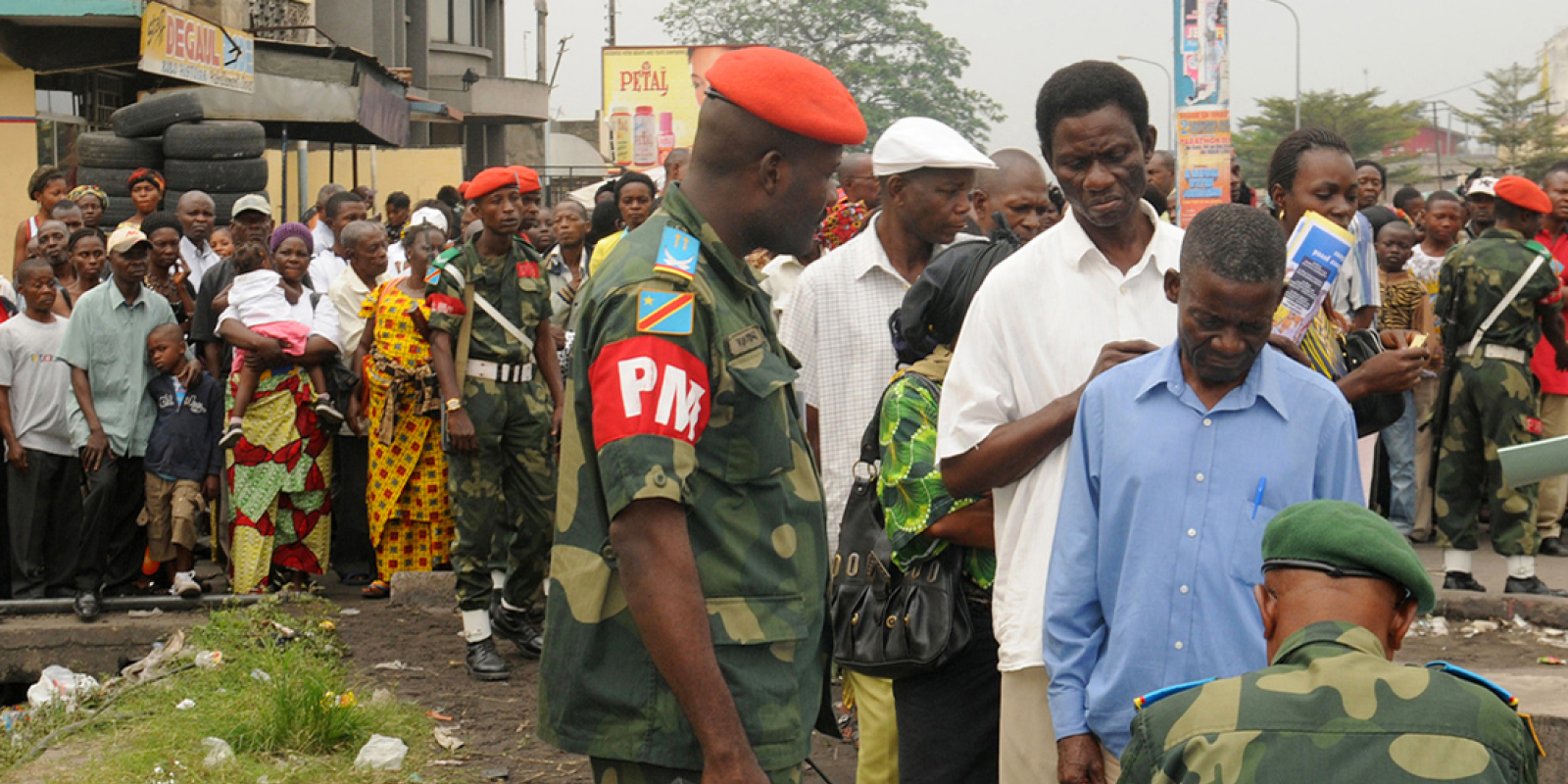
    One of the key issues Japan has highlighted in January during its presidency of the United Nations (UN) Security Council is the revitalising and strengthening of UN efforts to sustain peace. After years of decline, conflict-related civilian deaths have increased sharply, and there are questions as to how the UN can better help prevent and manage conflict in a complex and volatile peace and security environment that is starkly different from when the UN was founded in 1945. Armed conflicts have become more violent, recur more frequently, and have become more complex to prevent or resolve. In Syria alone, the UN Human Rights office estimate that more than 306,000 civilians have lost their lives due to violent conflict over the last 10 years. Other conflicts that have caused the most deaths in recent years include Afghanistan, Ethiopia, Nigeria, Somalia, Yemen, and, since 2022, the war in Ukraine.

    Context-specific peacebuilding refers to bottom-up or home-grown approaches to achieving and sustaining peace based on local or national cultural, historical, and political understandings of peace.

    As a direct result of these and other conflicts, it is estimated that over 100 million people have been forced to flee their homes. The UN’s humanitarian appeal for 2023 is over US$50 billion. Clearly, there is a need to invest more in preventing, managing and resolving conflict, including by continually revisiting and updating the UN’s peace and security concepts and approaches, as the UN Secretary-General outlined with a New Agenda for Peace in his Our Common Agenda report.

    In advance of the open debate that Japan hosted on January 26, Ambassador Ishikane Kimihiro said that to reinvigorate peacebuilding efforts, one must invest in the people affected by conflict as agents of change. The role that people play in restoring and sustaining peace in their own communities is also one of the main findings of research undertaken by Japan International Cooperation Agency (JICA). The project found that context-specific approaches to peacebuilding that empower local agency is a key element that influence the self-sustainability of peace processes.

    Context-specific Approaches and Adaptive Peacebuilding

    Context-specific peacebuilding refers to bottom-up or home-grown approaches to achieving and sustaining peace based on local or national cultural, historical, and political understandings of peace. It differs from approaches to peace where the values and concept of peace are imported from elsewhere. The people affected by the conflict determine the ideas or content, priorities, and values, and the peacebuilding process is aimed at (and limited to) facilitating a participatory process that help to strengthen or generate new social institutions through local and national ownership and leadership.

    The project found that context specific, participatory, and adaptive peacebuilding contributes to more self-sustainability. This empirical evidence is consistent with the theory of complex adaptive systems, where the capacity for self-organisation in a complex system, such as a community affected by conflict, has a direct bearing on its social cohesion, resilience and adaptive capacity. The premise is that investing in strengthening the self-organising capacity of communities and societies—in other words, helping them to strengthen their social institutions and social networks—will help build the resilience, adaptive capacity and social cohesion they will need to prevent or recover from conflict, and to consolidate, further grow and sustain the levels of peace that they have been able to achieve.

    Empirical Evidence in Africa, Asia, Latin America, and the Middle East

    One of the objectives of the research was to assess the potential of context-specific, participatory and adaptive approaches in a number of recent (and in some cases ongoing) conflicts. To do so, the project studied peacebuilding experiences in a variety of countries and policy contexts. The case studies included Colombia, Mozambique, Palestine, Syria, and Timor-Leste, which represent different conflicts in Africa, Asia, Latin America, and the Middle East and involve a diverse range of peacebuilding actors and contexts. As peacebuilding research has been dominated by Western concepts and practices, our research (to be published as a book in March 2023) also explores the peacebuilding approaches of two countries in the Asia-Pacific region, namely China’s peacebuilding role in South Sudan and Japan’s effort to promote peace in the Philippines, in order to assess the degree to which these countries have engaged in context-specific, participatory and adaptive peacebuilding.

    The Colombia peace process, which followed the 2016 Peace Agreement between the Colombian government and the Revolutionary Armed Forces of Colombia-People’s Army (FARC-EP), demonstrated the effectiveness of adaptive approaches to peacebuilding that were attuned to local needs and contexts. The research found that the adaptive approach that was used to implement the 2016 peace agreement was more successful in consolidating and sustaining peace in Colombia than previous attempts. International and local peacebuilders often worked together and used bottom-up and adaptive approaches to address local concerns and needs throughout the country.

    Similarly, the case of Mozambique showed how adaptive approaches to peacebuilding, which focused on context-specificity, national ownership, and adaptiveness, had more positive outcomes than earlier attempts influenced and driven by externally imposed concepts of what a peace processes should look like and how it should be managed. The effectiveness of the shift toward adaptive approaches in Mozambique confirmed that peace needs to emerge from within to be self-sustainable and that peacebuilding programs should stimulate self-organisation and resilience in order to prevent, manage, and sustain peace.

    The most effective context-specific approaches are those that are rooted in the history, culture, and current reality of the people affected by conflict

    Major peacebuilding donors in Mozambique, including the European Union, are following this trend and developing more context-specific approaches. Localised international non-governmental organisations such as the Community of Sant’Egidio (CSE) and the Aga Khan Development Network (AKDN) provide examples of how international peacebuilders can contribute to sustaining peace through adaptive approaches that focus on context-specific, participatory process facilitation, institutional learning, and addressing cross-cutting issues such as poverty, inequality, and education as part of a more holistic approach to peacebuilding.

    Overall, the case studies explored in the book found that the most effective context-specific approaches are those that are rooted in the history, culture, and current reality of the people affected by conflict, and show a link between the extent to which a peace initiative is context-specific and adaptive and its level of self-sustainability. They also show that context-specific and adaptive approaches to peacebuilding—ones that invest in people and encourage the active participation of affected communities—are more effective than top-down and determined-design approaches because they stimulate the emergence of local social institutions that work to promote and sustain peace. Top of FormBottom of Form

    Cedric de Coning is a Research Professor at the Norwegian Institute of International Affairs (NUPI), and Senior Advisor at the African Center for the Constructive Resolution of Disputes (ACCORD).

    Rui Saraiva is a Research Fellow at the Japan International Cooperation Agency (JICA) Ogata Sadako Research Institute for Peace and Development. Ako Muto is an Executive Senior Research Fellow at the Japan International Cooperation Agency (JICA) Ogata Sadako Research Institute for Peace and Development.

    This article was first published by the IPI Global Observatory on 17 January and can be accessed here.
  • Assessing the Effectiveness of the Multinational Joint Task Force

    Assessing the Effectiveness of the Multinational Joint Task Force

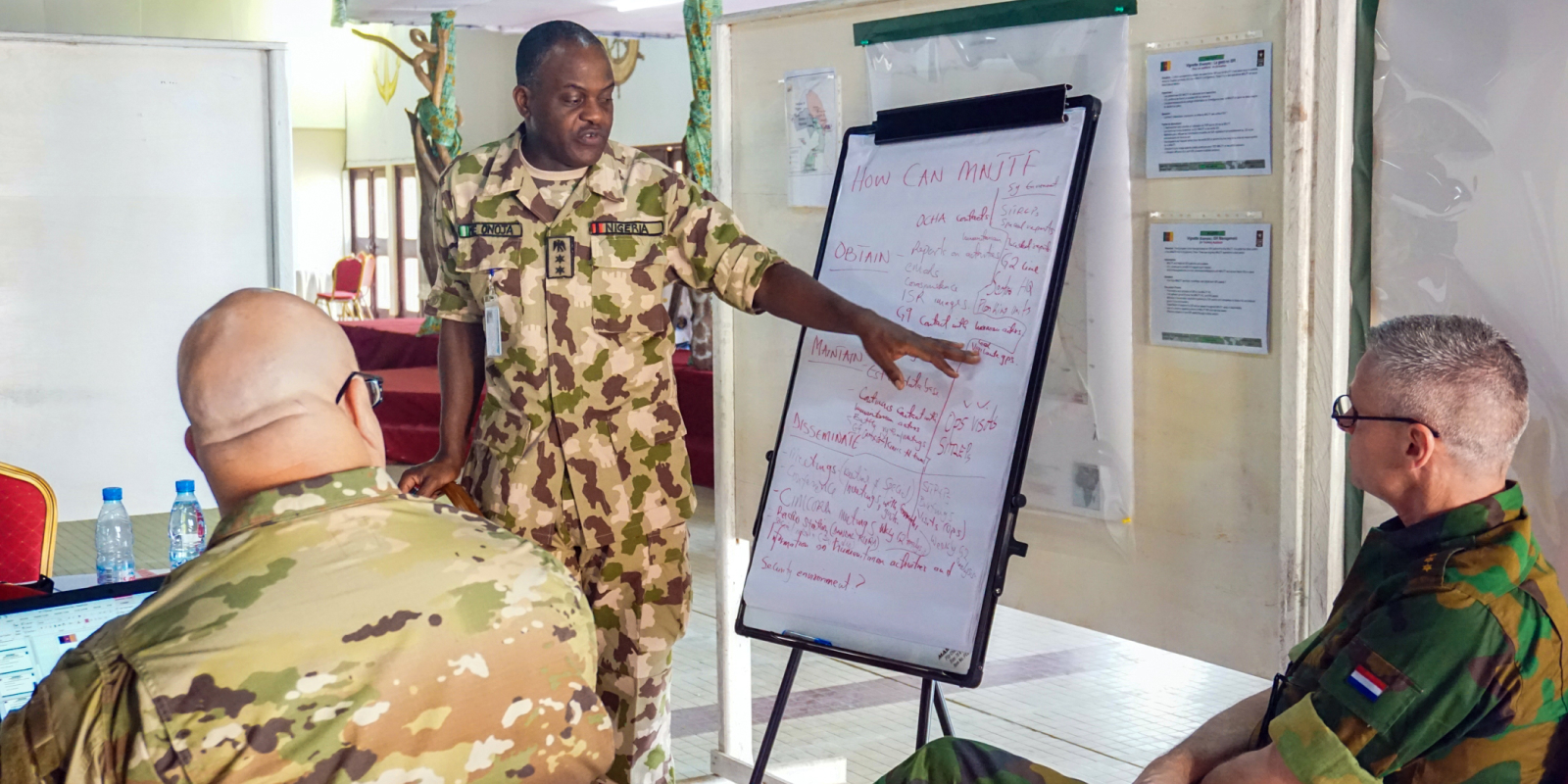
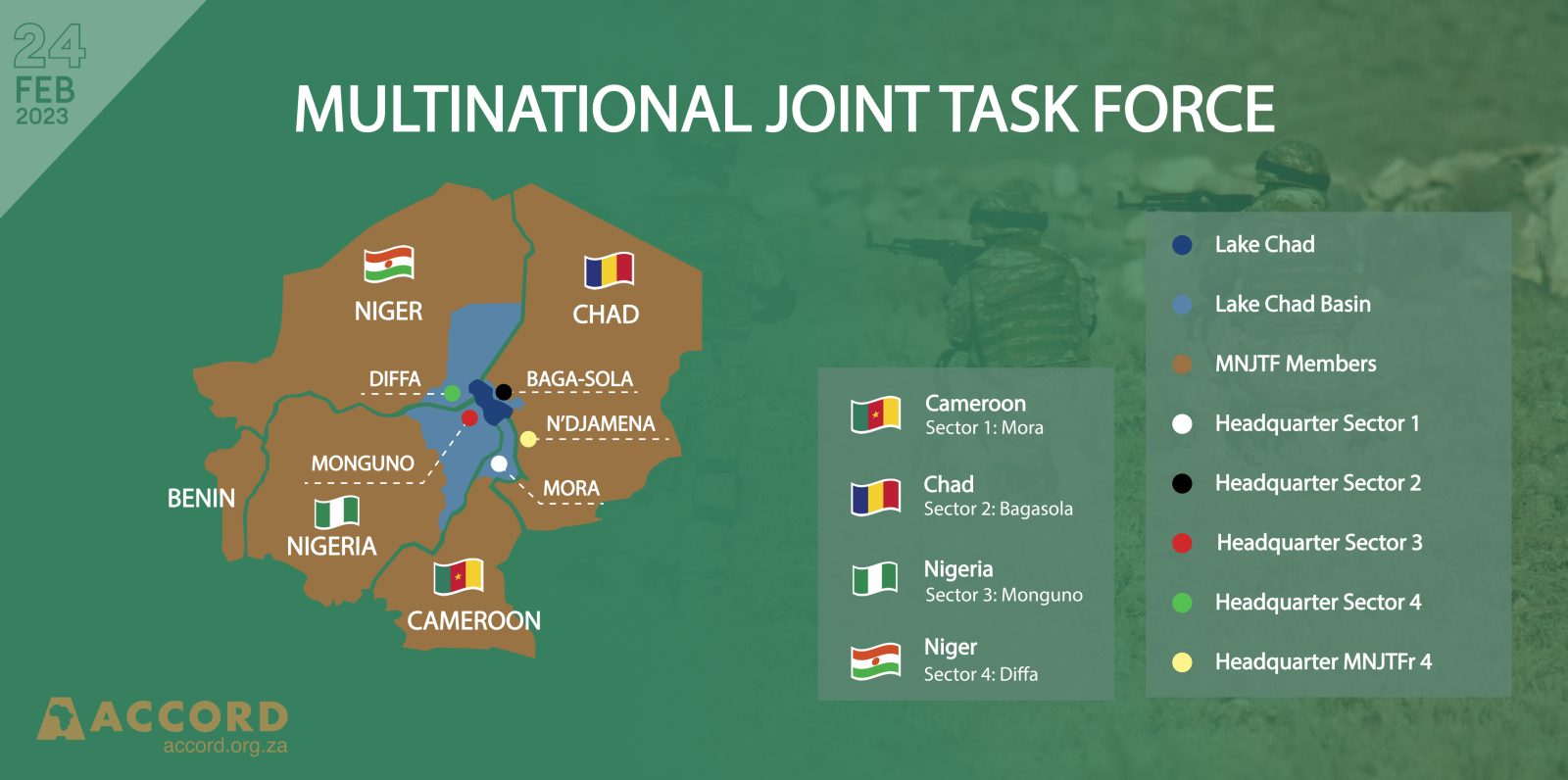
    The Multinational Joint Task Force (MNJTF) was re-activated in late 2014 by the Lake Chad Basin Commission (LCBC) as a regional security arrangement to fight the spreading threat of Boko Haram (BH) in the region. The African Union (AU) Peace and Security Council  (PSC) authorised the operationalisation of the Force´s mandate in early 2015 and has renewed its mandate on a yearly basis since then. The Force is comprised of troops from its five Troop Contributing Countries (TCCs), namely Nigeria, Niger, Chad, Cameroon and a smaller contingent from Benin, and it is tasked with three core mandated tasks:

    1. To create a safe and secure environment in the areas affected by the activities of BH and other terrorist groups in order to significantly reduce violence against civilians and other abuses, including sexual and gender-based violence, in full compliance with inter- national law, including international humanitarian law and the UN Human Rights Due Diligence Policy.
    2. To facilitate the implementation of overall stabilisation programmes by the LCBC member states (MS) and Benin in the affected areas, including the complete restoration of state authority and the return of IDPs and refugees.
    3. To facilitate, within the limit of its capabilities, humanitarian operations and the delivery of assistance to the affected populations.

    The efforts of the MNJTF has contributed to a decline in the number of terrorist attacks and fatalities in the region @EffectivePOps @T4PAfrica

    In order to achieve its mandate, the MNJTF is organised to operate across its Areas of Responsibility (AORs), which are divided into four sectors:

    What is unique about the MNJTF in comparison to other traditional AU Peace Support Operations (PSOs) is that each TCC operates within its own borders. According to the MNJTF´s Rules of Engagement (RoE), TCCs position themselves within their borders where they conduct their own national operations. However, in situations where it may be deemed necessary, forces can conduct joint operations where they may cross up to a 25km perimeter into neighbouring territory in hot pursuit of terrorists. The MNJTF operates under the direct political leadership of the LCBC and military command of its Force Commander, responsible for coordinating all activities across the four countries.

    An effective but highly under-resourced force

    The overall assessment is that the MNJTF is, to a degree, effectively attaining its mandate priorities. The MNJTF has conducted 6 major operations since 2015, in which it has managed to consolidate significant gains. For example, Operation Sharan Fage in 2021 led to the neutralisation of 22 BH/ISWAP terrorists, destruction of infrastructure and equipment and the clearing of over 20 towns and villages. In 2022, during Operation Lake Sanity, several BH/ISWAP strongholds were cleared, top terrorist commanders such as Abubakar Dan Buduma were eliminated, and 4 000 civilians were freed.

    The efforts of the MNJTF are also seeing a decline in the number of terrorist attacks and fatalities in the region from 8 119 in 2015 to 1 894 in 2021. This decline is also due to the surrendering of terrorists in the region –  1 711 terrorists surrendered in 2021 and 2 225 surrendered in 2022. Beyond its military efforts, the MNJTF has been able to create a conducive environment for refugees and IDPs to return home (200 00 between September 2021 and April 2022) and has remained steadfast in protecting and providing for them amidst the departure of some NGOs. In addition, the MNJTF is providing protection and a safe corridor for humanitarian actors to move and enter affected areas that they were not able to access previously. This is allowing broader affected populations to gain access to basic services and humanitarian assistance.

    However, the security situation remains critical given the high adaptability and mobility of the terrorists as well as the highly volatile circumstances in the region. Although operations are successful, they cannot be sustained for long periods of time. Once the military leaves the liberated areas, there is no police capacity to be able to protect and hold the areas for stabilisation programmes to begin. This allows terrorist groups to come back and reclaim those territories, become invisible and embedded within the local population and set up their own governance structures. The military is often forced to remain present to conduct policing tasks. However, the military does not have the capacity to operate at this level, nor the resources.

    The MNJTF is also facing the issue of inadequate, inconsistent, and insufficient funding and therefore it is unable to adequately plan, execute and sustain large-scale operations. Funding for the missions depends on external partners and their procurement processes or on the funding each TCC is able or willing to provide, making funding unpredictable and unreliable.  A similar issue is the lack of appropriate equipment and operational equipment to conduct effective and safe operations. For instance, the MNJTF does not have appropriate counter-IED equipment, or sufficient amphibious platforms, which directly affects the movement of all personnel across the AORs. The above, coupled with the lack of long-term, substantive and specialised trainings, as well as military doctrine and language differences among the TCC´s troops is significantly hindering the effectiveness of the force. Therefore, all mission stakeholders should prioristise closing those gaps before looking at external or alternative solutions.

    Role of the AU in support of the MNJTF

    The MNJTF differs from other AU PSOs in the sense that it is not formally mandated by the AU PSC. As mentioned above, the AU PSC only authorised the operationalisation of the MNJTF meaning that it is not deployed by the AU and therefore it does not operate under its command and control structures. Notwithstanding, the partnership between the AU and the MNJTF is vital, not only for the validity it gives the mission, but for the political support, funding and other aspects the AU can advocate for in its behalf.

    The AU has a Mission Support Team (MST) consisiting of 14 staff, located at the MNJTF´s Headquarters (HQ). The MST supports the planning, prioritising of tasks and coordinates the support from partners. This allows for the AU to be in constant communication with the mission where they are able to assess the most critical needs of the mission in order to advocate for further support. Through the AU, the MNJTF gets field and office material for the HQ, vehicles and other support from partners. For example, the EU provides, through the AU as a pre-financing body, approximately $500 000 per year ($120 000 per sector), and this is disbursed by the AU to the mission. In 2022, the AU coordinated with China the distribution of 16 armoured personnel carriers (4 per sector).

    The MNJTF is also facing the issue of inadequate, inconsistent, and insufficient funding and therefore it is unable to adequately plan, execute and sustain large-scale operations @EffectivePOps @T4PAfrica

    However, there is a general sense that this support is not enough and that the AU could be doing more and playing a bigger role in helping the mission acquire more equipment and funding. In addition to this, it is widely argued that the AU should make itself more visible in its convening and overseeing powers in order to support the Regional strategy for Stabilisation, Recovery and Resilience (RS-SRR) more effectively, to coordinate efforts of all stakeholders and MS, and to ensure intelligence and experience sharing across borders.

    Recommendations

    In order to address the contraints the challenges faced by the MNJTF and enhance its effectiveness, the following recommendations are worth considering:  

    1. Prioritise the development of police capacity across MS through training, rostering and experience-sharing. The PSC has called for the restructuring of the force into a more multidimensional one with civilian and police components. The debate is already taking place, however stakeholders need to take a step back and determine what can be done realistically, rather than what could ideally be done. Questions such as whether there is the capacity to deploy national police forces or whether there are enough resources and infrastructure for such deployments should be present in the debate.
    2. Strengthen the MNJTF´s intelligence posture by establishing an intelligence-sharing loop between the MNJTF, G5 Sahel Joint force, Accra Initiative and Nouakchott Process given the spread of terrorism beyond the LCB region; posting dedicated liaison officers to the Centre for Coordination and Liaison (CCL) to ensure optimal functioning of the regional intelligence fusion; and ramping up the capacity-building of relevant intelligence officers on how to use relevant equipment.
    3. Align training with core priority areas to close capacity gaps. This would include trainings on how to use newly acquired equipment such as ISR platforms or IED detectors. The AU PSC should undertake a critical needs assessment of the mission to identify the most critical training needs for the mission.
    4. Explore alternative means of complementary funding. In this regard, the MNJTF should explore the possibility of imposing a Peace and Stability Tax (PST) on the goods destined for cross-border trade to generate an extra percentage of complementary funds. In addition, the Head of Mission (HoM) and Executive Secretary of the LCBC should seek further support from the AU to activate the African Solidarity Initiative (ASI) to assist the activities of the RS-SRR.
    5. Intensify governance and developmental interventions. There is a need for all actors involded in the RS-SRR to prioritise pillars Five and Six of the strategy to properly resource the provision of socioeconomic initiatives such as youth empowerement programmes and other developmental projects, restore ties between the population and the state and improve partnerships between between the mission and CSOs.

    These recommendations speak more to what could be done ideally, rather than realistically. Therefore, the question all stakeholders involved should be asking themselves is what can be done with the already available means. In other words, how could we capitalise on or use those means in a more effective way.

    Mariana Llorens Zabala is a Junior Research Fellow at the Norwegian Institute of International Affairs (NUPI).

    This article is a summary of the report A quest to win the hearts and minds: Assessing the Effectiveness of the Multinational Joint Task Force published by the Effectiveness of Peace Operations Network (EPON) and Training for Peace (TfP) Programme.

  • Crossroads: The Significance and Prospects of Nigeria’s 2023 Presidential Election

    Crossroads: The Significance and Prospects of Nigeria’s 2023 Presidential Election

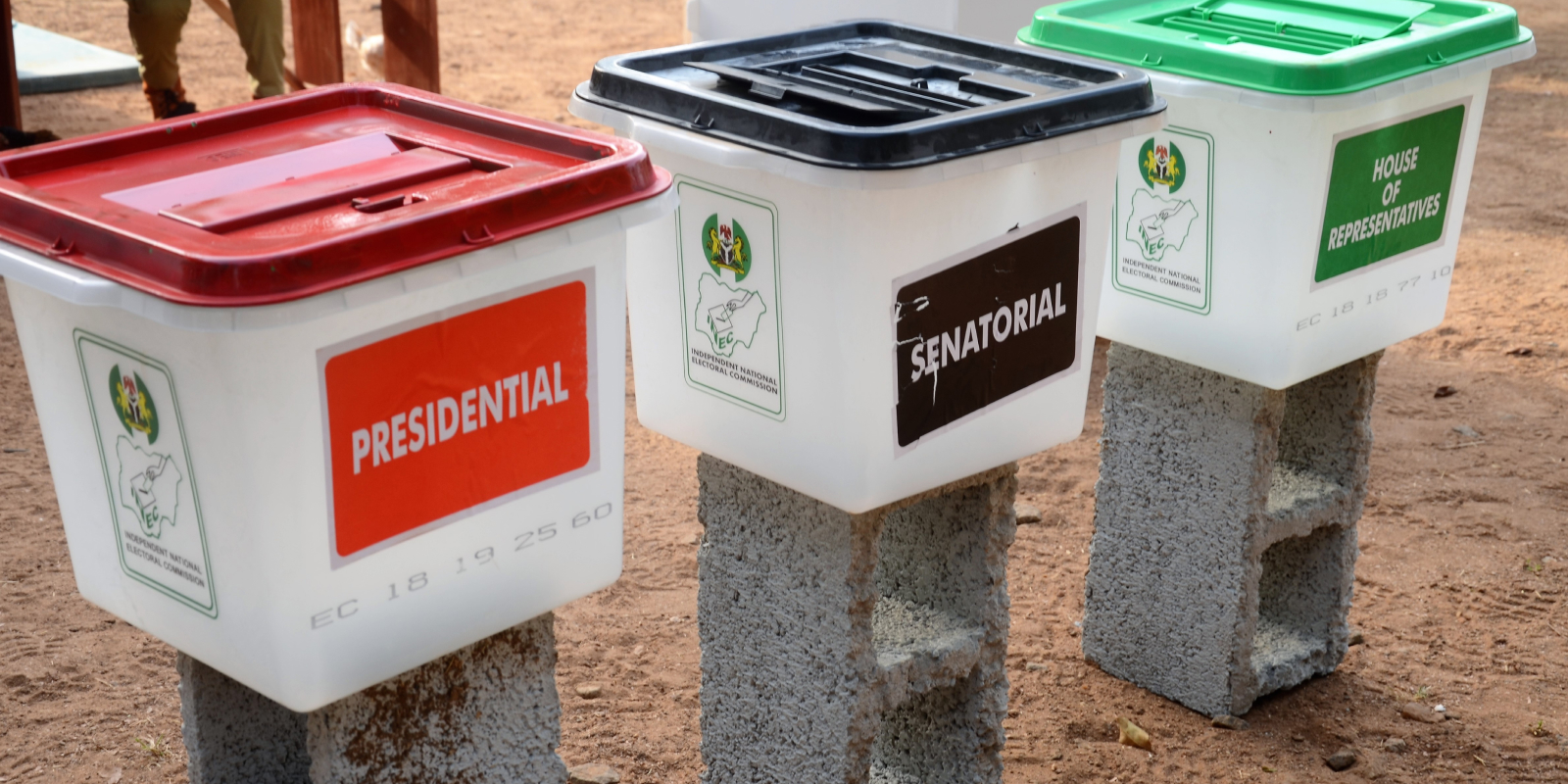
    There comes a time when a society and its people must decide whether it should seek to continue the status quo or challenge it and Africa’s history is proof. While democratic elections are possible drivers of change and purposed to be non-violent, African societies are riddled with certain complexities and impeding factors which tend to drive these societies towards violence. Africa’s most populous country, Nigeria, will be at such a point on 25 February 2023, when it holds its Presidential and National Assembly Elections; the 7th in the Fourth Republic (1999-2023).

    The 2023 Presidential Election is very significant in so many ways, not only to Nigerians, but to Africa and the world at large, due to some indicators playing out

    Nigeria’s first attempt at challenging the status quo in its fourth republic was by successfully unseating the incumbent in the 2015 Presidential Election which was lauded by the international community when former President Goodluck Jonathan was defeated by the incumbent President Muhammadu Buhari. The 2023 Presidential Election is very significant in so many ways, not only to Nigerians, but to Africa and the world at large, due to some indicators playing out. Ranging from political, economic and security issues at the domestic level to Nigeria’s position/alignment on the global scene in the coming years, the election has regional (ECOWAS), continental and global significance, especially on the new direction of Nigeria’s foreign policy and stance on global political issues, for the next six to twelve months.

    The lived reality in Nigeria is currently marked by unprecedented levels of poverty and unemployment, an exodus of the youth population, and a high debt profile. This also includes an inflation rate which rose to 21.82 in January 2023 from 21.34 the previous month. Additionally, the controversial and untimely new currency redesigning, which has led to the withdrawal of old naira notes to be replaced by new notes, which are not properly circulated, leading to a crisis as this piece is being written.  The health and education sectors are begging for attention as Nigerians go to the polls. Amidst this, the “dark cloud” of terrorism and violent extremism still hover over some communities in northern Nigeria; although the Nigerian military has gained impressive grounds over the last year. In the same region (especially in the North-West), many communities suffered attacks within the last six years where hundreds of thousands were displaced or killed, through farmer-herder conflict, banditry and kidnapping.

    This includes cross-border banditry, indicating the urgent need to enhance border security. For communities in the North-Central region, the most challenging security issue has been with (armed) herders whose cattle feed on their crops and many deaths were recorded in this context. To the South-East, secession agitation has increasingly become a source of unrest within the last decade which threatens the stability in the region. In the South-West (as well as other parts of the country), kidnapping has become rampant, as oil theft in the South-South geopolitical zone of Nigeria was under the spotlight in 2022. All these, among many other things, are drivers of humanitarian crises. All these issues are crucial to understanding how significant this election is for many Nigerians who consider any or all of these as the core issues that require redress. What to do and how to achieve it has therefore been the focus of candidates and their parties’ manifestoes, indicating an impressive attempt at responsiveness from those who intend to hold the highest office of the land.

    There are 18 presidential candidates in an election where more than 70 political parties are participating in the 25 February election. However, for the first time in Nigeria’s fourth republic, the three major candidates representing the major political parties, (Atiku Abubakar-PDP, Bola Ahmed Tinubu-APC and Peter Obi-Labour) that have dominated all previous pre-election polls, represent the three major ethnic communities, regions and religions. Also, for the first time in its history, a candidate from the Southeast geopolitical zone has within a very short period of time (less than six months) enjoyed organic nationwide support at a magnitude that was unpredictable. This coincides with a period when Nigeria’s youth population have taken particular interest in elections as a defining moment, stirring and driving an unprecedented campaign for voter registration and collection of Permanent Voter’s Cards.

    However, the total number of registered voters in 2019 (84,004,084), for example, exceeded the total number of votes cast (28,614,190) implying that the 35.66% voter turnout was a drop from 43.66% in 2015; the youth drive is predicted to upset the regular voting pattern with positive prospects of overcoming the huge voter apathy. Thus, considering the recent massive exodus of Nigerian youth, with more in-waiting, a high-voter turnout from a greater fraction of Nigeria’s demography who are known for voter apathy in the past may be the defining constituent for Nigeria’s next President.

    This context is testament to a degree of inclusion and active participation that is unexpected given the various challenges that rather provoked escapist behavioural patterns and a lack of interest in the past. It has become evident to those who pay attention that, regardless of the challenges, the prospects to consolidate democracy in Nigeria are positive and three major encouraging factors buttress this; Nigeria’s incumbent President’s spoken and unspoken commitment to a free and fair election, the passing of Nigeria’s new Electoral Act which was passed in 2022 and leveraging modern technology through the BVAS system which is believed to help enhance the integrity and transparency of election results could be a defining moment in this election. Many people have argued that these new developments may enhance and ensure Nigeria’s democratic process and consolidation.

    Nigeria’s youth population have taken particular interest in elections as a defining moment, stirring and driving an unprecedented campaign for voter registration and collection of Permanent Voter’s Cards

    Amidst the enthusiasm, however, there are certain pressure points that have developed within the last four months which has led to protests in some states. The ruling party, under which Bola Ahmed Tinubu is contesting, appears to have an internal crisis. The campaign has seen key actors accusing the Executive of initiating policies that are aimed at sabotaging the election or the selection of Tinubu as Nigeria’s next President. How this may result in violence is unclear, but it is a pressure point to watch as clashes between some party supporters behind Tinubu and security agencies is a possibility. The policy that stoked this accusation include the redesigning of the naira which has led to scarcity of naira. Protests in this regard have led to several deaths. This period also coincides with a nationwide fuel scarcity and increase in pump prices which is also purported to be deliberate. Another pressure point to look out for include threats and voter intimidation which some voters are likely to encounter in some parts of the country.

    Constitutionally, section 126(2) of the 1999 constitution of the Federal Republic of Nigeria, as amended states that: 

    A candidate for an election to the office of President shall be deemed to have been duly elected where, there being more than 2 candidates for election –

    (a) he has the highest number of votes cast at the election; and

    (b) he has not less than one- quarter of the votes cast at the election in each of at least two- thirds of all the States in the Federation.

    This means that, in the forthcoming election, if any of the candidates are not able to fulfil the two aforementioned provisions, especially (b) above, no one will be declared the winner and by implication there may be a run-off election as provided for in section 126(3) of the constitution. The emergence of the Group of 5 (G.5) Governors (Abia, Benue, Enugu, Oyo and Rivers States), the ongoing currency swap/redesigning and fuel scarcity crises could also influence the outcome of the Presidential election.

    Finally, the judicial system has increasingly become a prominent actor in Nigeria’s electoral process in recent years. This includes post-election petition processes (which has a potential to upset the public) and responding to perpetrators of electoral violence. The threat the various armed groups pose is also a major concern as they may obstruct elections or take advantage of vulnerabilities during the election period. Therefore as Nigerians go to the polls to decide the direction of the country and who will drive it, the Nigerian state must demonstrate political and security preparedness to handle whatever hurdles surface.

    Joshua Olusegun Bolarinwa, PhD is the Head of the Security and Strategic Studies Division, Research and Studies Department at the Nigerian Institute of International Affairs (NIIA) Lagos, Nigeria.

  • Eswatini: the year ahead

    Eswatini: the year ahead

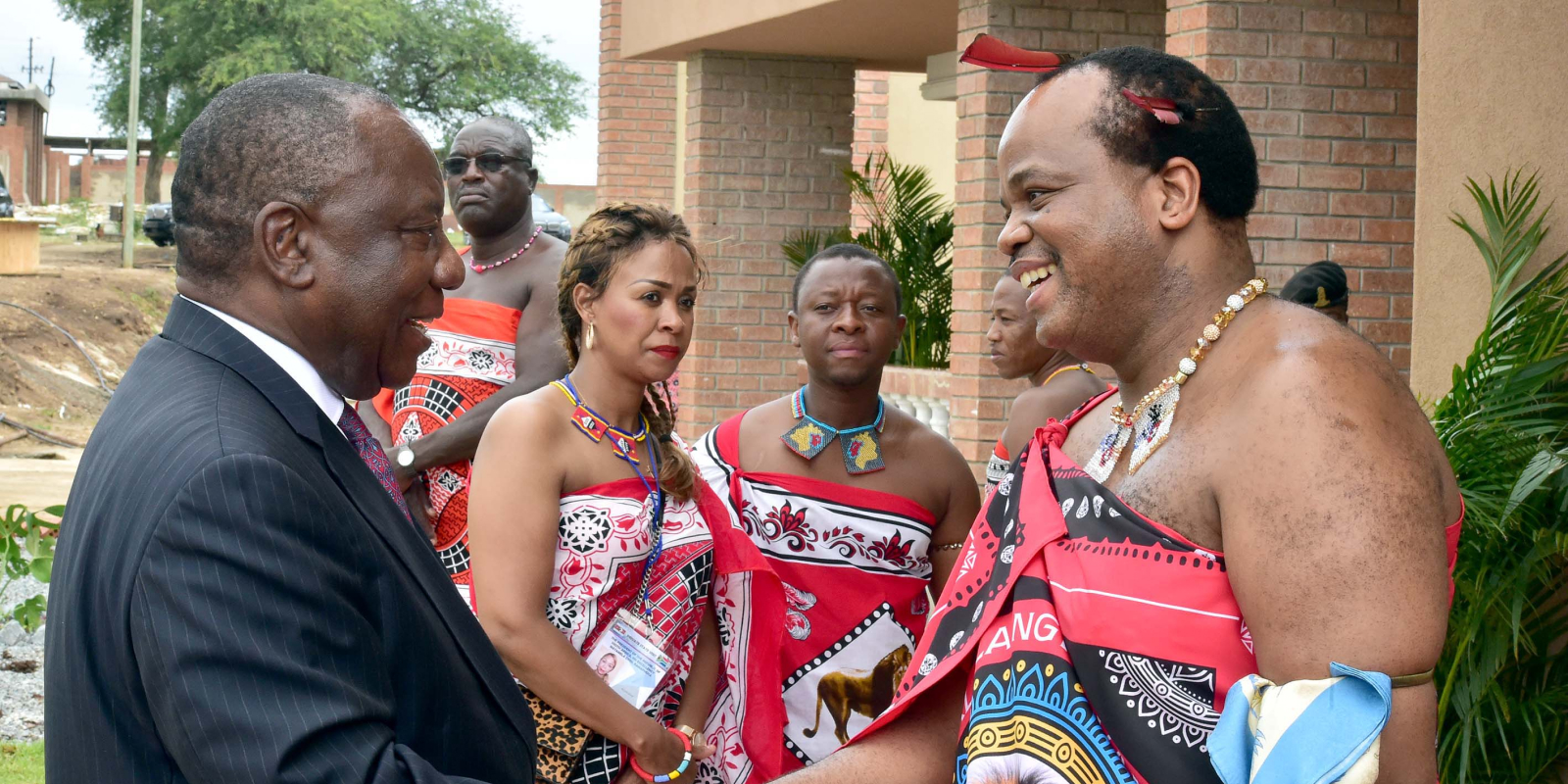
    Eswatini started 2023 at the forefront of the world’s attention following the death of human rights lawyer, Thulani Maseko.  His death saw the world turn their gaze on the current situation in Eswatini in a conflict that had, hitherto, not captured attention outside of the Southern African region.  The Southern African Development Community (SADC) has continued to grapple with the situation, but their interventions have not progressed.  Aside from the additional interest that the Kingdom received following Maseko’s death, Eswatini is set to host elections in 2023, an occasion that is sure to change the current balance of forces in the country.

    On 21 January, prominent human rights lawyer Thulani Maseko was gunned down in his house.  Maseko was an outspoken opponent of the current political system in the country, and the Chairperson of the Swaziland Multi Stakeholder Forum (MSF).  The MSF is a forum of political parties in Eswatini that has been leading the calls for democratic reform in the Kingdom.  The MSF and other opponents of the monarchy have claimed that Maseko was assassinated by the government who wanted to silence one of their most prominent opponents.  Indeed, a spokesperson for Thulani Maseko’s family has also indicated that they suspect state involvement in his assassination.

    The government has denied any involvement in Maseko’s death and has indicated that they will not rest until the perpetrators have been bought to book.  However, the government’s denial of any involvement is undermined by the comments that King Mswati made only a few hours before Maseko’s murder, when he said activists should not “shed tears” about “mercenaries killing them.”  Some activists, such as the Swazi Solidarity Network, have alleged that South African mercenaries carried out the hit on Maseko on behalf of the government.  The Solidarity Network claims that the government have hired mercenaries from South Africa, the Middle East and Asia to carry out assassinations and torture.  The government has denied that there are any mercenaries operating in Eswatini, but they did indicate that the government has engaged the services of security experts to assist with security issues that the Kingdom faces.

    For now, there seems to be no clear evidence that mercenaries acting on behalf of the state carried out a hit on Maseko and as of yet, no one has been arrested for his death.  Human Rights Watch has called for an independent, impartial, and transparent investigation into Maseko’s death and have also called on South Africa to launch their own investigation into the allegation of South African mercenary activity in Eswatini.  Human Rights Watch were not the only international voice to address Maseko’s death.  The African Union (AU) also called for an independent inquiry to investigate the murder, while the European Union (EU) called Maseko’s death a brutal assassination and called for the launch of the delayed national dialogue.  In addition, the United Nations (UN), United States and United Kingdom all condemned Maseko’s killing and along with the EU, sent delegates to his memorial service.

    Thulani Maseko’s murder has made it harder to ignore the tensions currently playing out in the Kingdom and has opened the monarchy and the government up to renewed criticism.  It remains to be seen whether the death of a prominent opponent of the state provides greater emphasis to finding a solution to the ongoing tensions.

    Thulani Maseko’s murder has made it harder to ignore the tensions currently playing out in Eswatini and has opened the monarchy and the government up to renewed criticism

    Nine days after the murder of Thulani Maseko, SADC convened their extraordinary organ troika summit in Namibia.  SADC condemned the killings and damage to property that has taken place in Eswatini, urged the government to urgently initiate the national dialogue processes and called for a transparent investigation into the murder of Thulani Maseko.  The chair of the organ, Namibian President Geingob, did acknowledge that there has been an increase in tensions in Eswatini, indicated that the incidents were regrettable and called for peaceful solutions to the challenges that Eswatini faces.

    However, the presentations made by Eswatini to the organ do not point to a national dialogue taking place soon.  A government spokesperson indicated the government’s reticence to engage with pro-democracy stakeholders that the government alleges have threated to kill and destroy the homes of people who do not share their pro-democracy sentiment.  The spokesperson also indicated that the government was undertaking the preparations for iSibya, but that the outbreak of violence delayed those processes.  The government position is that they are prepared to go to a national dialogue, but that the pro-democracy stakeholders are the ones delaying the dialogue.  However, comments from the government that they believe pro-democracy stakeholders are threatening them does not inspire confidence that the government is prepared to sit around the table with these stakeholders.  The national dialogue is the intervention proposed and supported by SADC.  However, a year after it should have taken place, Eswatini appears to be no closer to holding the dialogue.  A time will come for SADC to either propose a new solution to the challenges in Eswatini, or intervene more directly to ensure that the national dialogue does take place.

    In addition, 2023 is an election year in Eswatini.  Eswatini is an absolute monarchy, but does have a unique electoral system, known as the Tinkhundla system, to conduct elections.  The House of Assembly is made up of 66 seats, where 55 are elected via elections, 10 are appointed by the King and the remaining seat is given to the speaker of parliament who is chosen from outside of parliament

    The Senate on the other hand is made up of 31 members, 10 of whom are selected by the House of Assembly and 20 of whom are selected by the King.  Under the Tinkhundla system, Eswatini is divided up into constituencies known as inkhudla (Tinkhundla in plural).  The Tinkhundla are then divided up into smaller chiefdoms, where the first phase of elections takes place.  Nominations for candidates to the legislature is done at the community level and in the open, where a person’s name is called out and by a show of hands the community indicates if they nominate that person of not.  The nominee then either accepts or rejects the nomination.  A chiefdom must have at least three nominees, but no more than 20.

    Following the nomination process, primary elections take place in the chiefdom via secret ballot.  The primary elections must produce one candidate to contest the secondary elections.  Between the primary and secondary elections the candidates have an opportunity to campaign for votes.  However, since political parties are banned in Eswatini, candidates must campaign on a non-partisan basis.  The secondary elections take place at the Inkhudla level to decide on the candidates who will represent the Inkundla at the national level.

    These scheduled elections are a key event in Eswatini.  Elections have the potential in any country to heighten tensions and Eswatini may prove to be no different, especially as tensions are already raised.  Elections are also proving to be a point of contention amongst pro-democracy parties, as opinions are divided on whether or not to compete in the elections.  Elections do provide an opportunity to get pro-democracy candidates into the national legislature, but an argument against competing in elections is that participation may be interpreted as condoning the current system of elections. 

    Eswatini is an absolute monarchy, but it does have a unique electoral system, known as the Tinkhundla system, under which elections is scheduled to be held in 2023

    Having pro-democracy members of parliament could be beneficial to the advancing the argument for democratic reforms in the Kingdom.  A strong performance from pro-democracy candidates in the elections would undermine the argument from the monarchy that pro-democracy activists are in the minority in the Kingdom and that the majority supports the status quo.  Alternatively, a strong performance from pro-monarchy candidates would strengthen the position of the monarchy and the argument that the monarchy enjoys the support of the majority of the population.

    The elections have the potential to escalate the current tensions in Eswatini.  As such, the build-up to the elections, the elections themselves and the post-election period should also be observed closely.

    Katharine Bebington is a programme officer in the research unit at ACCORD.